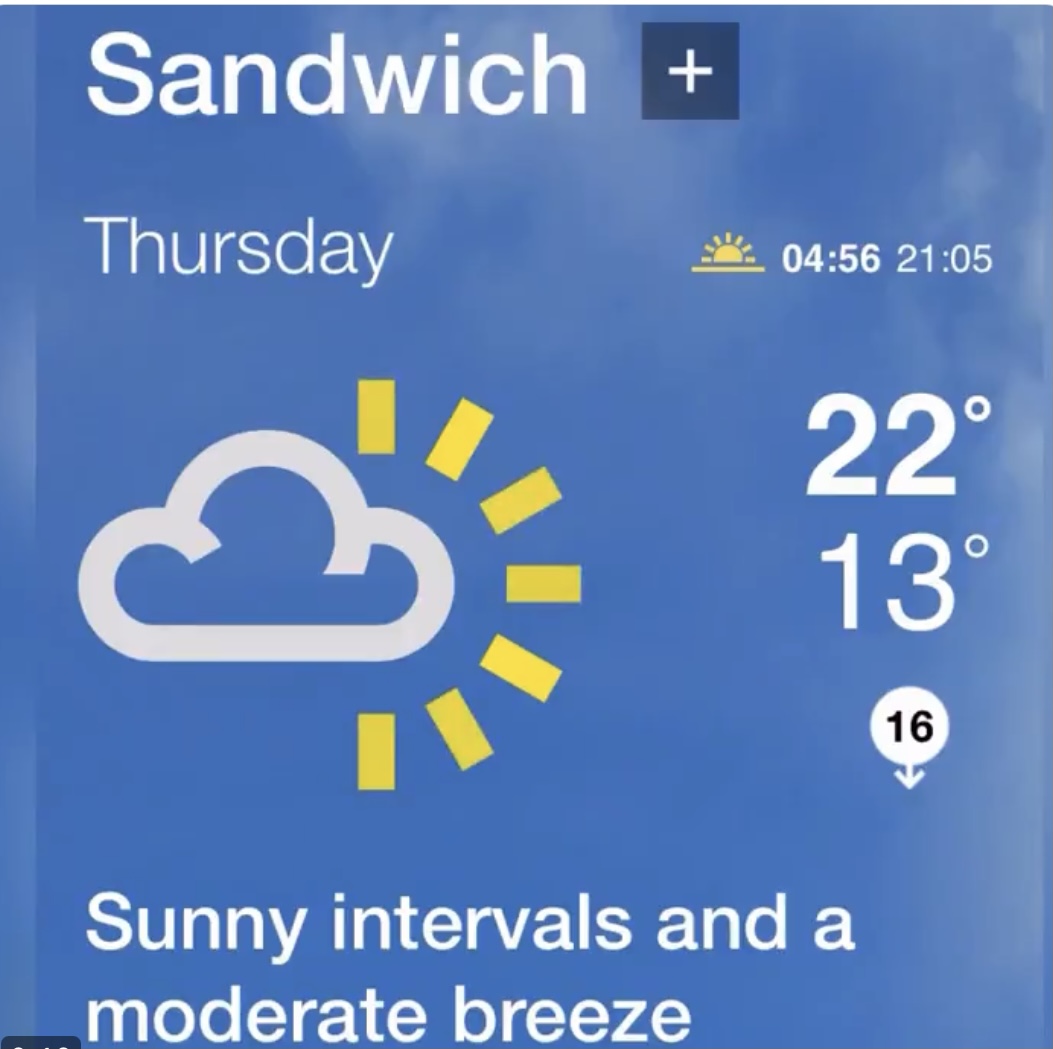
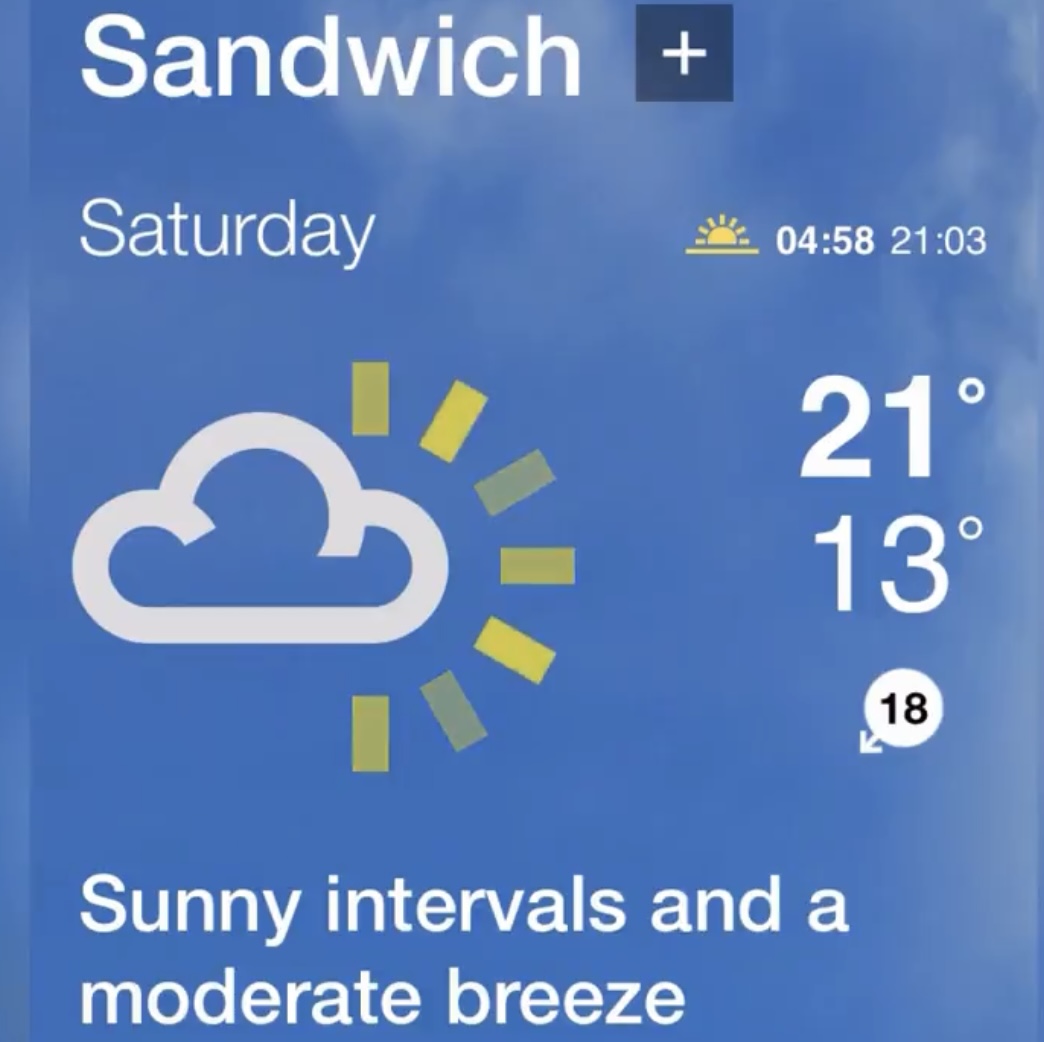
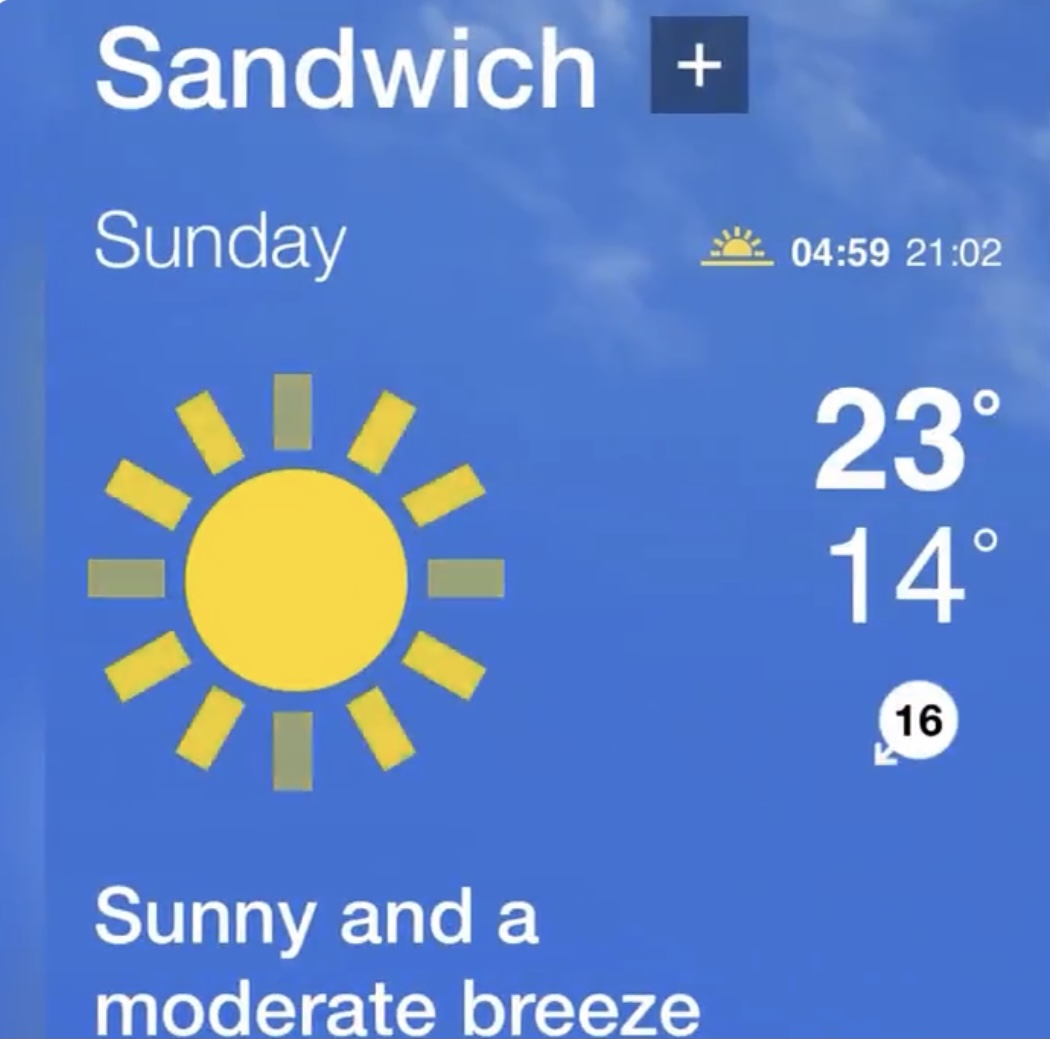
The Open weather

Course likely to firm up by Sunday making it much tougher, Strong stable l-r prevailing wind 15-20 mph, hopefully will change to make things more interesting. Most difficult holes will be the 4th and 14th.
Posted in Uncategorized | Leave a comment

Jon Rahm talks about his club foot affecting his swing

US open champion Jon Rahm talked to the press yesterday about why he swings shorter, it’s not about tight hips.He says “let your body dictate how you can swing”.

JON RAHM: I’m going to say I’ve been pro for five years. I’ve mentioned this before. This is the first time I’m getting this question because I’m tired of hearing that the reason why I have a short swing is that I have tight hips or other things. 

If you know anything about golf, that is the stupidest thing to say. So for people that don’t know, I was born with a club foot on my right leg, which means for anybody that’s sensitive about that, my right leg up to the ankle was straight, my foot was 90 degrees turned inside and basically upside down. 

So when I was born, they basically relocated, pretty much broke every bone in the ankle and I was casted within 20 minutes of being born from the knee down. 

I think every week I had to go back to the hospital to get re-casted, so from knee down my leg didn’t grow at the same rate. So I have very limited ankle mobility in my right leg. It’s a centimeter and a half shorter, as well. 

So what I mean by limitations is I didn’t take a full swing because my right ankle doesn’t have the mobility or stability to take it. So I learned at a very young age that I’m going to be more efficient at creating power and be consistent from a short swing. 

If I take a full to parallel, yeah, it might create more speed, but I have no stability. My ankle just can’t take it. 

Now, also, and this is where I’ve learned doing many TPI tests, my wrists don’t have much mobility this way, but I’m hyper mobile this way. That’s why I also naturally turn to bow my wrist to create power in every single sport I do. 

So that’s why my swing, I bow my wrist and that’s how I hit it. It’s little things that I think a lot of people can learn. Let your body dictate how you can swing. Simple as that. That’s why Dave has been such a great addition to me when I started going to TPI with the Spanish Golf Federation, because they can teach me how my body moves and what I can — not what I can or cannot do, what I’m going to be more efficient at doing. 

The main thing is my right foot. It’s just that ankle does not move much.

Posted in Uncategorized | Leave a comment

Billy Horschel rocks his West Ham bag

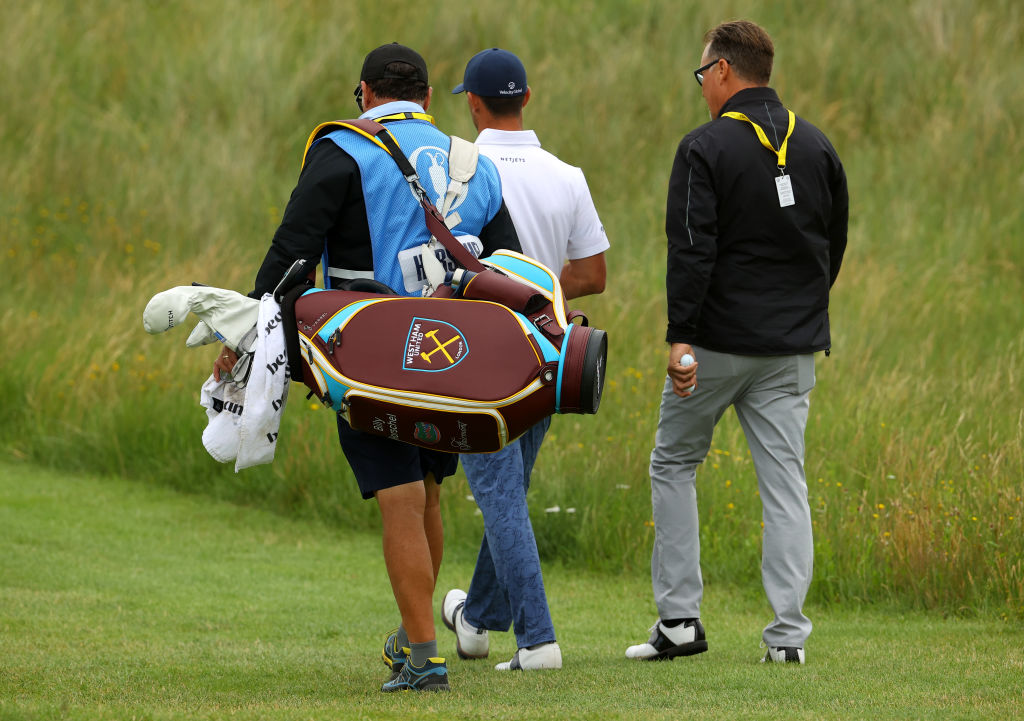
Now this was a much more uplifting story. Billy Horschel brought out a new bag in practice adorned with the colours and emblem of West Ham United, with kind permission from the club.

SANDWICH, ENGLAND – JULY 13: A detailed view of a golf bag belonging to Billy Horschel of The United States during a practice round prior to The 149th Open at Royal St George’s Golf Club on July 13, 2021 in Sandwich, England. (Photo by Andrew Redington/Getty Images)

Billy Horschel, like Francesco Molinari and Paul McGinley, is an avid West Ham supporter even though he lives in Florida. He began his support when in college he saw the film Green Street on DVD and was intrigued to find out about the club. He watches all their premiership matches from ABC live broadcasts in America.

When he won the WGC – Dell Technologies Matchplay in March he received a text of congratulations from club captain Mark Noble who will be watching him in practice at Sandwich tomorrow.

Selected practice rounds can be watched live on theopen.com website in the morning, and also on Sky Sports from 2pm.

Matt Fitzpatrick is also having the Sheffield United emblem on the range. Will Ian Poulter have a big Arsenal logo on his bag too?

Posted in Uncategorized | Leave a comment

First divot this week

Goes to Bryson de Chambeau. To begin he has revealed his strategy is to bomb the ball down the fairway. He’ll find out about Royal St Georges. The course has softened after the heavy rain we had in the South East last night, and will have played a lot different from how it will in the championship rounds when the expected sun and heat dries the course out and all kinds of bounces will come into play.

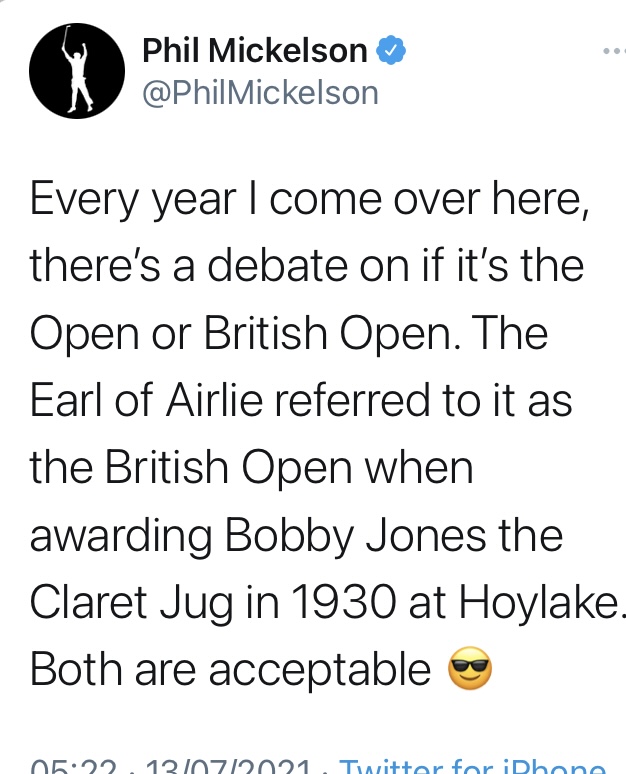
Second, although he was surrounded by lots of hoardings with the correct name The Open on them, he still persisted in calling it The British. Mickelson then jumped in on this and apparently its the Earl of Airlee’s fault for calling it the British to Bobby Jones. No. Look at the hoardings in 2021. It’s The Open. Definitively.

Then Bryson said in his press conference that he shouts “fore” “99% of the time. Apparently the 1% of time he didn’t was today, and was called on this by a British journalist who asked why.

But mostly the divot goes to him for allowing the feud with Brooks Koepka to continue and not being adult enough to put a stop to it. It ignited again on social media today and all he could say was he doesn’t have a problem with it. But we do.

Stop it now, its getting old.

Posted in Uncategorized | Leave a comment

The Open Tee Times Round 1

6.35 Bland, Sullivan, Armitage

6.46 Kim, Harding, Li

6.57 Lorenzo Vera, Fernandez Castano, Gallegos (a)

7.08 Noren, Ritchie,Mansell

7.19 Burmester, Willett, Shepherd (a)

7.30 Bezuidenhout, Horsfield, Lee

7.41 Hovland, Palmer, Detry

7.52 Casey, Ancer, Poulter

8.03 Koepka, Kokrak, Higgo

8.14 Berger, Niemann, Dahmen

8.25 Clarke, Weisberger, Long (a)

8.36 Kirk, Kinhult, Senior

8.47 Gooch, Pan, Thomson

9.03 Els, Woodland, Hammer

9.14 Burns, Herbert, Campillo

9.25 Spieth, Dechambeau, Grace

9.36 Harman, Hughes, Fritelli

9.47 Perez, Streelman, Migliozzi

9.58 Lowry, Rahm, Oosthuizen

10.09 Cink, Westwood, Kaymer

10.20 Johnson, Zalatoris, Rose

10.31 Scheffler, Garcia, Lin (a)

10.42 English, Van Rooyen, Reavie

10.53 Glover, An, Snedeker

11.04 Tringale, Kanaya, Schneider

11.15 Griffin, Hoshino, Wordsall

11.36 Rai, Waring Croft

11.47 Van Tonder, Janewattananond, Bring (a)

11.58 Varner III, Steele, Schmid (a)

12.09 Merritt, Long, Ahlers

12.20 Day, Luiten, Veerman

12.31 Catlin, Langasque, Pike

12.42 Harrington, Kennedy, Forgan

12.53 Finau, Horchen, Hadwin

1.04 Cantlay, Fitzpatrick, Fox

1.15 Molinari, Leishman, Wallace

1.26 Morikawa, Conners, Munoz

1.37 Scrivner, Mitchell, Bairstow(a)

1.48 Hoffman, Grillo, Hebert

2.04 Bradley, Lee,Cabrera-Bello

2.15 Ortiz, Todd, Schwab

2.26 Simpson, Henley, Norris

2.37 Jones, Hillier, Siem

2.48 Mickelson, Hatton, Kisner

2.59 Schauffele, Macintyre, Fowler

3.10 Thomas, Fleetwood, Scott

3.21 McIroy, Reed, Smith

3.32 Stenson, Homa, Kuchar

3.43 Rozner, Kinoshita, Hutchinson

3.54 Kitayama, Lawson, Saksansin

4.05 Inamori, Walker, Celia

4.16 Karlberg, Nagano, Poppleton

Posted in Uncategorized | Leave a comment

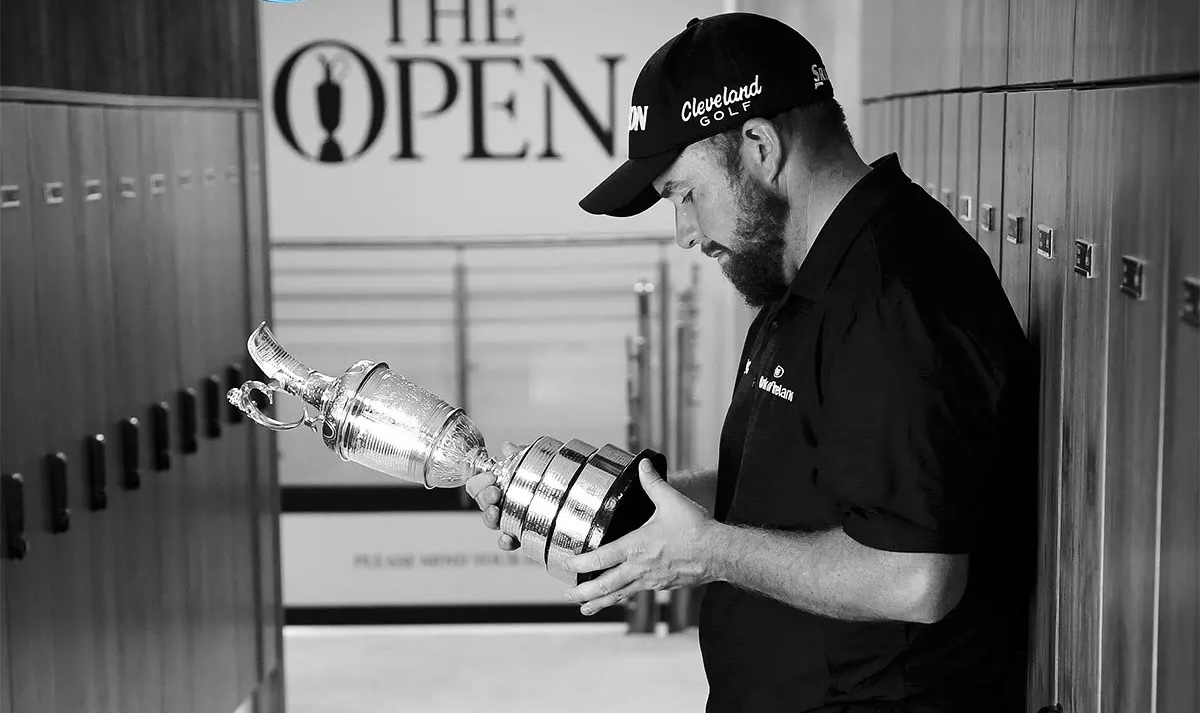
Shane Lowry returns the claret jug

One last look in the Royal St Georges locker room before Shane Lowry returns the claret jug. He did keep holdmof it for an extra year.

Posted in Uncategorized | Leave a comment

The Open: the excitement begins

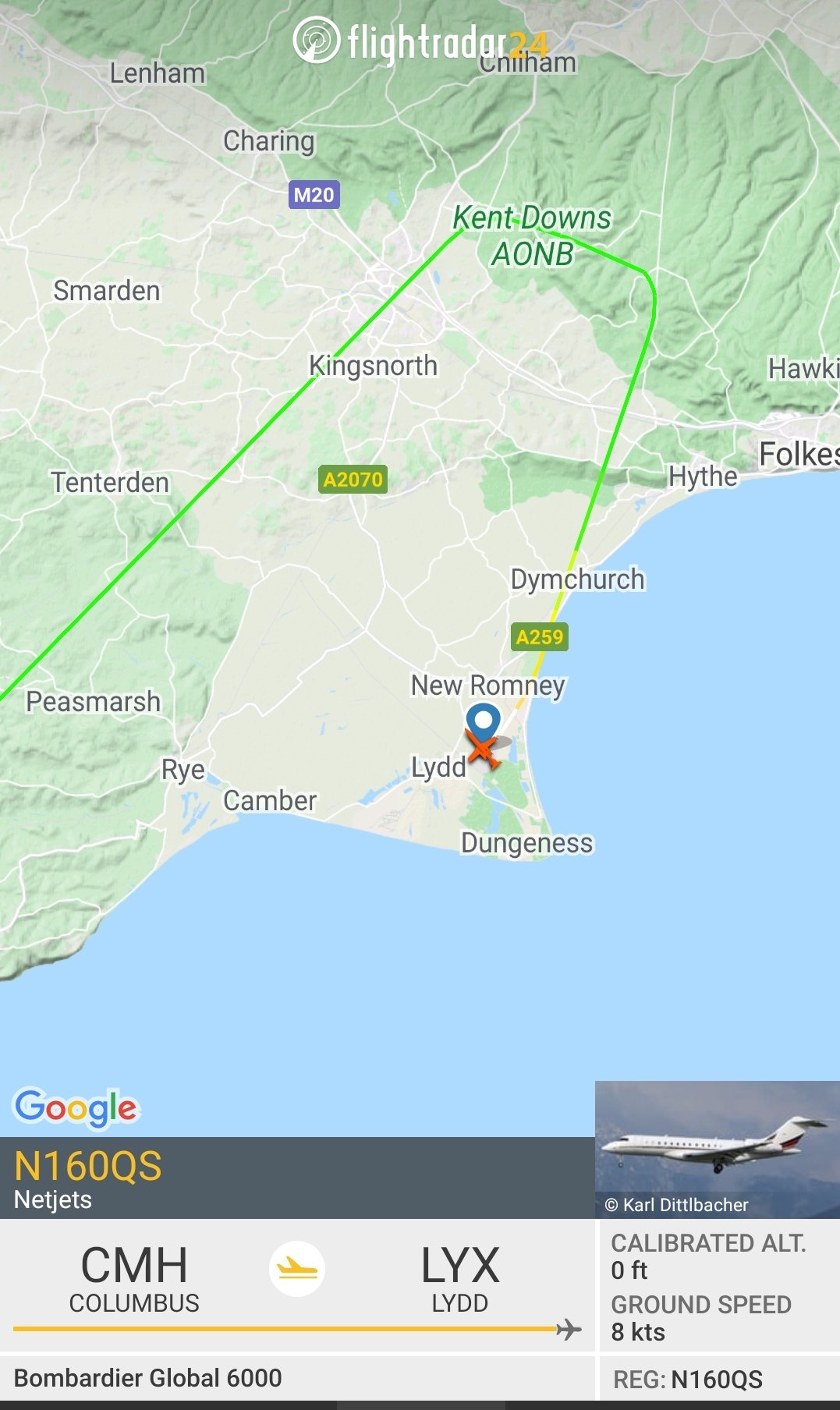
I am an av geek, which means I love to look at planes. And Flight Radar 24 app is often a source of information. Spotted today one of the first arrivals of a private jet from America into Lydd Airport in Kent, near to the Open venue Royal St Georges.

Guesses as to who is on board? As the jet came from Colombus, several states away from where the John Deere Classic on the PGA Tour was held last week, it may not be one of the pros who teed up there, especially as there is a charter flight today.

The player most synonymous with Columbus is Jack Nicklaus. It could be him.

Posted in Uncategorized | Leave a comment

What to do on the tee

Every time that you stand on a tee, it is a fresh start. Each hole presents a different challenge and no matter what has happened playing the previous holes, this is a new beginning.

The tee shot is usually what will affect your score. It gives you an opportunity to work out the best angle of attack to the hole.

Once you leave the tee, you will be playing the ball from the variables of the golf course. The slopes, the rough, the hazards, so use the teeing ground to your best advantage.

The tee is of strategic importance. It’s where you work out where to position your tee shot as far down the fairway as possible, avoiding trouble on both sides.

Once you arrive at the tee, identify the hole’s major features. Something substantial like a stream down left or a large tree or bunkers. 

Look for a contoured fairway lake in front of the green or slope on the green, isolate these key features and get a basic strategy worked out for attacking the hole. Decide how many shots you’ll need to reach the green.   Then organise these shots estimating distances and choosing what clubs. Stick to your plan.

Look for a point that will guide you in the teeshot, the marker can be a tree or a hazard or a fixed object.  Aim towards that point. Pick a target area to land your ball.

Choosing where and how to tee up

Walk around the tee and walk from one side to the other and see how perspective changes. Stand between the markers and landing area.

All tees are not necessarily aimed towards the ideal target. It is always the players job to determine the right angle of approach. Various tee positions could dramatically change the target or landing areas.

The rules of golf allow you to tee up between the markers and no more than 2 club lengths behind them. The ball must not be in front of them. Skilled players will usually place the ball on the side where there is greatest trouble and play away from it towards the safer, open side of the hole.

The different teeing areas mean that all players will be tested, regardless of their ability.  Pick the tees that suit your game.  Don’t let your ego dictate which tee you should use. An extra 40 yards per hole could give you a much more enjoyable round.

Elevated tees can build confidence because you have to worry less about getting the ball airborne.  But a drop from the tee to the fairway will make any mistake you make with your line more difficult.  Elevated tees can tempt you into swinging hard with a disastrous consequence of offline shots. You need to strike the ball accurately or you will end up in trouble or out of position for your second shot.

How high your ball is teed relates to the club and shot. Tee high you have an ascending blow, driver, woods, long irons, hybrids.

Middle or short irons need to be teed lower.

Tees are usually tipped slightly to create surface drainage. Tipped downhill it can cause you to hit a higher shot than intended and uphill, lower shot and lose distance.

Where are the edges of the hole?  Is the tree line edging the rough? Where are the out of bounds markers? How do the playing conditions affect bounce or roll?

A runway tee – a long, straight area often 50 yards in length were intended to accommodate 3 sets of tees for golfers of different skills. The tee will point directly at t he landing area near a major hazard or obstacle like a bunker.  The tee should aim you toward the proper target.

You will probably notice a mowing pattern on the teeing surface itself and a cut of rough to accentuate the perimiters. Remember you can use any part of the tee, so long as you don’t tee up in front of the tee markers to endure your best alignment you can also use the edges of the tee.

Elevation of the tee can create improved visual effects for the player.  The player who has a game plan which they use on each tee usually scores better.  It makes sense to analyse the course in detail before you begin the round.

Tools to help your strategy

Use the scorecards and a yardage book. These are tools to help you.

These show the shape and physical characteristics of the holes.  The areas of water, the location of bunkers in landing areas and target zones and the yardages from the tees to holes on each tee. 

What you won’t see is the wind direction.  Try to determine how the wind blows – throw grass into the air and watch how it flies. If you can talk to the professional in the pro shop and ask for information about prevailing winds and local rules and difficult holes. Look for the local rules pinned up in the locker room so you know what they are.

Yardages – make sure you read them from the tee you’re going to play from.  Each set of tees is designed to challenge your shot making skills.

Look in the locker room for any local rules and what advantages they provide.  Ask about the toughest holes, types of grasses, speed of the greens, rough and strategy. Use your PGA professionals knowledge.

As you go round your home course jot down distances, elevations, features and any data that  helps you understand your design strategy.

Elevated tee positioned above the fairway landing area, difficult to determine because of increased distance you obtain from the vertical drop.

Preferred landing area is tightened because an errant shot will travel farther through the air and farther off line. Move forward – higher the elevation, the straighter the club.

Tee in relation to other features.  If a tee is tucked into trees, and protected, you won’t be able to tell the wind direction. 

Look at the balance of the course.  If there are more par3s on one half of the course it may have an easier start or finish.  This can help you adjust your mindset on how you play.

Handicaps can help you anticipate the relative difficulty of individual holes. On every scorecard holes are ranked from 1 to 18. Look for hard stretches of holes, sharp swings from hard to easy again which could upset your playing rhythm.  Often you will start easy and finish hard on the front nine.  Know the rhythm of the course to help you prepare mentally.

Slope rating – the scale indicates the overall difficulty of a golf course. 70 is easy, 150 is hard.

Risk and Rewards

Most tees have a psychological element. Designers sometimes try to intimidate players to create indicisiveness about club and shot selection.

Most tee shots have gambling elements. It may be flying the ball over trees to cut off part of the hole.  It’s a bit like playing chess against the course architect. Try to find the perfect route to t he hole.  Jack Nicklaus once said 

“there is an ideal route for every golf hole ever built.  The more precisely you can identify it, the greater your chances for success”.

One way to do this is to look at the position of the pin and work back to the tee with your eyes. Look for the best angles from the fairway and the prime landing area for your tee shot.  Don’t forget that pin positions can be changed daily and take into account the weather.

Look at the green area – a portion of the green may be guarded by water making the other side of the fairway the perfect spot from which to attack the target.

If you can’t see the green from the tee, look at the hole’s shape to work out the best position from which to approach the final target.  If the hole doglegs from right to left the left side of the landing area will usually be the preferred angle of approach and will shorten the distance to be covered.

Do you hook or slice? Can you fade or draw the ball? Use our own shot making pattern to play the hole’s layout with your strengths. Every tee is a new opportunity to improve or mend your score.  The key to good scoring is finding the fairway off the tee. Taking all of these into account in how much risk are you willing to take. Weigh up the risks and rewards. Every tee is a new opportunity to improve or mend your score.  

Posted in Uncategorized | Leave a comment

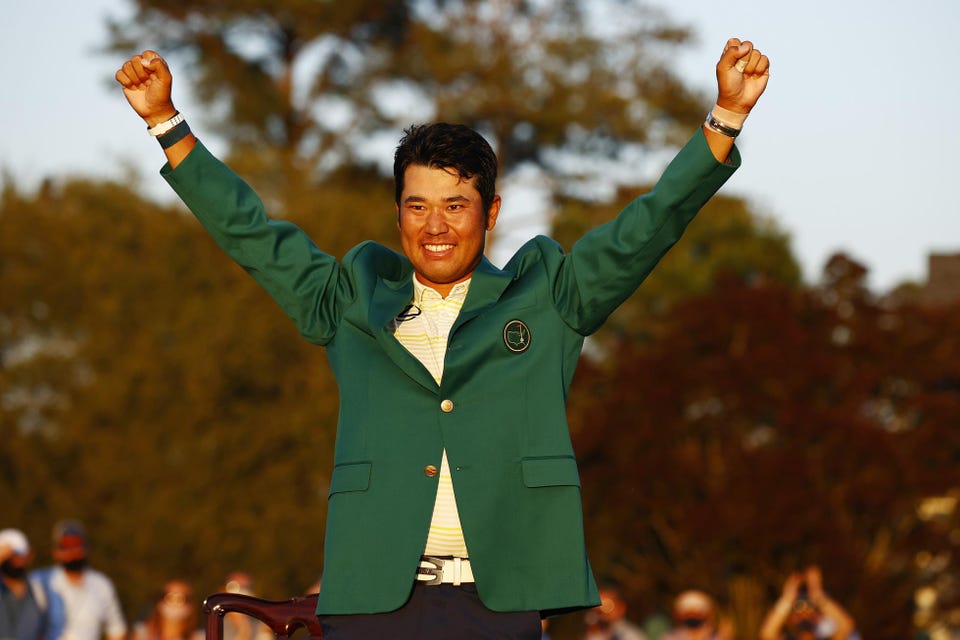
Masters champion Hideki Matsuyama latest player to withdraw from The Open

In a statement just released the R&A have informed that Masters champion Hideki Matsuyama has withdrawn from the Open Championship.

Hideki tested positive for covid on July 2 before the second round of the Rocket Mortgage Classic and although he isn’t experiencing symptoms he has been in quarantine. He says that he has had insufficent time to prepare for the Open. He would also have to test negative before entering the UK. The R&A have stricter safety protocols in place for players. In the statement he says that his team and he have decided to withdraw to ensure everyone’s safety. He will next play in the Olympic mens golf event in his home country and is exoected to be a torchbearer at the Opening Ceremony. Hideki’s spot in the Open field has been given to Harold Varner III.

I’m feeling fine but haven’t been able to practice in preparation for The Open,” Matsuyama said in a statement released by the R&A. “Combining that with the difficult travel to the UK, my team and I have decided it’s best to withdraw to ensure everyone’s safety.

“I feel badly missing The Open and look forward to playing again at St Andrews next year. I’d like to thank the many golf fans for their continued concern and support as I strive to return to the game I love as soon as possible.”

Other high profile withdrawals are Bubba Watson, who has been in close contact with someone suffering from covid. He will be replaced by Brendan Steele. Matthew Woolff has not stated a reason, but is on a 2 month absence from the game for mental health reasons. He is replaced by England’s Andy Sullivan. 2001 Open Champion David Duval withdrawal gives a place ti John Catlin.

Danny Lee of New Zealand is injured, and K H Lee has withdrawn on the birth of his child. They are replaced by Antoine Rozner and Troy Merritt.

Min Woo Lee of Australia’s win at the Scottish Open after a three man playoff gives him a place.

Spots also go to Scottish Open runner up Thomas Detry and Jack Senior. Interesting that there is only one Scotsman, Bob McIntyre, in the entire field.

Other late withdrawals are former Open champion Zach Johnson and South African Louis de Jager who have both tested positive. Sam Horsfield and Dylan Fritelli now have places in the championship.

Kevin Na cited the international travel restrictions, giving his place to double major champion Martin Kaymer and Charles Howell III has withdrawn again – he also pulledmout at the Royal Portrush Ooen and Ryan Moore has too due to a back injury.

Posted in Uncategorized | Leave a comment

What’s so special about Louis Oosthuizen?

If you have 10 minutes, have a look at the slow mo sequences Of Louis Oosthuizen. It answers the question. He’s one of my favourite players to watch and every golfer can not only admire his beautiful tempo but take the images with them. It’s such a fluid, rhythmic movement.

Always a feel player, he says “I have no idea why I swing the way I do. I just try to get the timing right and all the basics”. He’s been a pupil of Pete Cowen for a long time, and he has worked with Louis to toghten up his shoulder muscles to gain more control.

He seems also seems to be working on another couple of areas – keeping his hands in front to prevent the backswing getting to steep. Also, this photograph taken on a practice ground, shows a drill that he is doing to help him get a full hip rotation. The plank of wood behind him tells him when the hip has cleared to the right position.

Louis is also number one ranked in stokes gained putting on the PGA Tour by some points. He’s had two very strong results in both the PGA Championship and the US Open this season. In the US open he was chasing Jon Rahm hard until a horrible drive landed in a hazard on the 17th hole and it seemed to shake him.

The 2010 Open Champion is a player for the big occasions and seems to focus better under pressure. Coming runner up must be getting annoying, I feel it’s his time next week at The Open. Louis is my pick to win.

Posted in Uncategorized | Leave a comment