Team USA produced a remarkable comeback after trailing by three points heading into the singles matches. The four-day event at Medinah was entertaining throughout, and by Saturday night it finally seemed the International Team realised the cup was within reach. Their dominant performance (a 5-0 sweep) of the Thursday foursomes, and holding their nerve on Friday and Saturday had set them up for a remarkable win. On paper, the odds were stacked against the Internationals, only one player in the World top 10, but on the course they were much stronger and better than anyone had expected.
Team USA were rallied before the Sunday singles matches by President Trump. After the victory, American captain Brandt Snedeker gave the President the credit for the win. It was interesting to see President Trump’s power move handshake to Adam Scott where he pulled his hand back to himself and yanked Scott’s arm. A move to indicate dominance and meant to intimidate!
The Americans’ pulled off the greatest ever Sunday singles performance. Justin Thomas was particularly impressive pulling off his first Presidents Cup singles win. He never let up after going 4 up after 4 holes and never letting Corey Conners into the match. Thomas won 5 &3.
World number one Scottie Scheffler’s match against Nico Echavarria was dramatic. On the 14th hole, an American fan shouted during Echavarria’s backswing, sending his tee shot badly off line. Scheffler confronted the fan, saying, “There’s no place for that.” Then, after missing his own birdie putt to win the hole outright, he conceded Echavarria’s 30-foot putt — a generous act of sportsmanship in the circumstances. It was not the only incident: earlier in the week, someone shouted “Get in the water” during another International player’s tee shot. Scheffler won the match 2&1.
The fan behaviour was not as bad as at the Bethpage Black Ryder Cup, but there was still a rowdy atmosphere later in the week after a dull, quiet vibe on Thursday and Friday when the matches were sparsely attended.
International captain Geoff Ogilvy said “I’m impressed with this group of guys they were committed to this, the spirit is amazing, they’re all incredibly motivated to come back in 2028 and do it again.
Although the Presidents Cup has been run since 1994, the International team have only won once, in 1998, with a tied match in 2003. But this match at Medinah felt like the Ryder Cup match of 1983 at Palm Beach Gardens, when the Europeans lost in America by only one point. Seve came in to the European team room then and told everyone to get excited “We’ve proved today, we can win this” and they did, for three matches in a row after that. The Presidents Cup seems to be at that pivotal point now.
There are things that could be changed that would make things better and fairer. The PGA Tour runs the Presidents Cup and both teams. The International team need a degree of independence from this set up. Also, to exclude players who had been playing on the LIV Tour, particularly now it does not currently exist, was wrong. It meant that the highly successful Joaquin Neimann and former Open Champion Cameron Smith were excluded. They would have greatly strengthened the International team.
By the next match in 2028 at Kingston Heath GC in Melbourne, Australia, let’s hope some exciting new talent has emerged — including Casey Jarvis, Keita Nakajima, Wenyi Ding and Yanhan Zhou from China. Former Masters champion Adam Scott will be 48 then, but now is still playing excellent golf.
He could perhaps become a vice-captain with a view to captaining the team in the future. Geoff Ogilvy did a strong job this time: clever, creative and involved even in Medinah’s course redesign, which worked superbly. The only strategic decision I questioned was his choice not to front-load his best players in the singles matches.
In contrast, I doubt we’ll see Brandt Snedeker in any form of captaincy role for USA again. He was too affected by the stress of the matches, and even called himself on it on Friday, “I don’t think I’ve done my job very well”. This kind of self-flagellation was a bit cringey and immature, At the end of the match he gave all the glory to the President of the United States. This was him not taking responsibility too, even though the President clearly did have a positive effect on Team USA’s morale on Sunday.
The Internationals can most definitely win this and do it in 2 years’ time on the back of this positive performance this match. The tide is turning.
Ahead of next week’s Dunhill Links Championship, here is a concise look at the famous double greens on the Old Course at St Andrews and Old Tom Morris’ innovations in course design.
Screenshot
The Old Course is known for its seven double greens, shared by the 2nd and 16th, 3rd and 15th, 4th and 14th, 5th and 13th, 6th and 12th, 7th and 11th, and 8th and 10th holes. Each pairing adds up to 18.
Only the 1st, 9th, 17th and 18th holes have single greens.
The double greens developed from a combination of natural geography, limited space and the original routing of the course.
When the Old Course was first laid out, it occupied a narrow strip of linksland bordered by gorse and heather. With little usable space, the early routing ran straight out and back along much the same line, so golfers played to the same greens in both directions.
As golf became more popular in the 1800s, this shared-green arrangement caused delays, near misses and confusion as groups approached the same targets from opposite directions.
Rather than building entirely separate green complexes, the solution was to enlarge the putting surfaces so each could hold two holes and two flags. In 1856, Old Tom Morris formalised the double-green layout, creating the distinctive arrangement still associated with St Andrews today.
A colour-coded flag system helped players identify the correct target, and it remains in use:
White flags mark front-nine holes going out.
Red flags mark back-nine holes coming in.
Screenshot
Old Tom Morris did not invent the 18-hole round, but his work at St Andrews helped make it the global standard. Before the change, St Andrews had 22 holes. In 1764, the Royal and Ancient Golf Club combined the first four and last four short holes into four longer ones, reducing the course to 18.
Even after that change, the course remained congested because much of the routing and several greens were still shared.
Old Tom Morris’ redesign
When Morris returned to St Andrews as Keeper of the Greens in 1864, the 1st and 17th holes still shared a putting surface, creating a major bottleneck.
Around 1863–1864, he separated the 1st green from the 17th, creating an independent opening green and easing traffic at one of the course’s busiest points.
Along with separate teeing grounds, this produced the layout recognisedtoday: seven double greens and four single greens.
Because St Andrews was golf’s epicentre, other clubs adopted its 18-hole model, helping establish it as the standard format worldwide.
Modernising Golf Course Architecture
Morris’s influence extended beyond the number of holes. He also helped shape modern course design and maintenance in several important ways.
Strategic bunkering
Before Morris, many hazards were simply natural features. He helped turn bunkers into strategic obstacles, placing them so players had to choose position and route rather than rely only on distance.
Separate teeing grounds
Earlier players often teed off close to the hole they had just completed.Morris introduced dedicated teeing areas, improving flow and protecting the greens from unnecessary wear.
The two-nine loop: At St Andrews and courses such as Muirfield, Morris helped popularise the pattern of a front nine moving away from the clubhouse and a back nine returning to it, creating the familiar stop at “the turn”.
Agronomy innovations: He advanced greenkeeping by top-dressing putting surfaces with sand to promote healthier, tighter turf and by supporting mowing practices that produced more consistent greens.
Morris also designed influential courses elsewhere, including Forfar Golf Club, one of the earliest courses built as an 18-hole layout from the outset.
His work at Prestwick, including the famous blind Alps hole, further shows his lasting influence on golf course architecture.
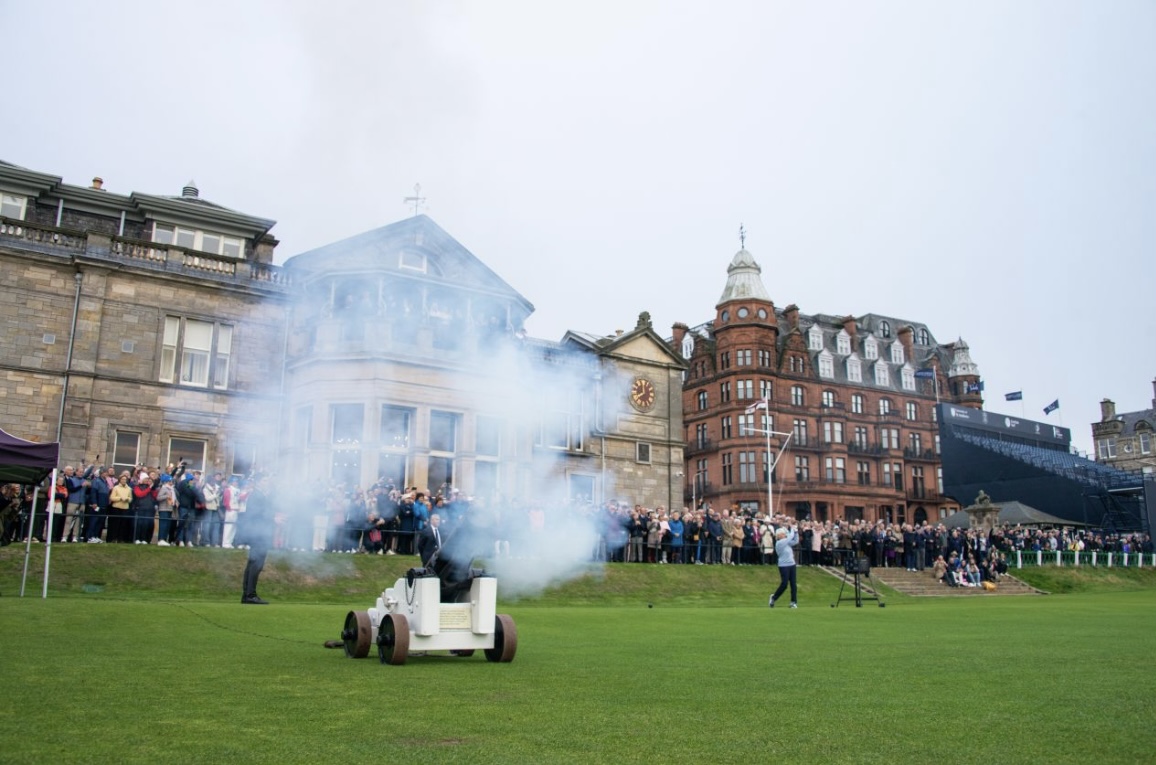
The Royal and Ancient Golf Club of St Andrews welcomed its new Captain, Claire Dowling, at the traditional driving-in ceremony on the 1st tee of the Old Course this morning.
Claire becomes the first woman to serve as Captain of The Royal and Ancient Golf Club of St Andrews.
At precisely 8am, a cannon fired and Claire launched her opening drive down the fairway to officially commence her term.
A large gathering of Members, former Captains and members of the public assembled to share in the time-honoured tradition.
As Captain of The Royal and Ancient Golf Club of St Andrews, Claire will be an ambassador for the Club and The R&A, engaging with Members at events around the world and championing the sport as The R&A brings its new Opening Golf to the World strategy to life.
Throughout her year in office Claire will represent the Club at many of The R&A’s professional and amateur championships and international matches, meeting those who contribute to golf at every level.
After hitting her tee shot, Claire said, “To begin my year as Captain here in St Andrews, surrounded by friends and fellow Members, is a very special moment. It is a huge privilege to serve as Captain of The Royal and Ancient Golf Club of St Andrews and I am honoured to be the first woman to take on the role. The Club has such a remarkable history and tradition but it is continuing to evolve which is so important for any institution.
“I am really looking forward to representing the Club and to everything the year ahead will bring. I’m also excited to be supporting The R&A as it continues its important work to develop and promote golf around the world while celebrating everything that makes our sport so special!”
Claire becomes the first woman to serve as Captain of The Royal and Ancient Golf Club of St Andrews. A distinguished amateur golfer, she represented Great Britain and Ireland in the Curtis Cup on four occasions and was part of the team which made history in 1986 by securing the first GB&l victory over the USA on American soil, winning 13-5 at Prairie Dunes.
Born and educated in Dublin, Claire won five Irish Championships, the first in 1983, as well as the Ladies’ British Open Amateur Stroke Play Championship in 1986 and the Spanish Amateur Championship in 1987.
After a successful playing career, Claire captained the GB&I Curtis Cup team in its narrow 10-8 defeat to the USA at Ganton in
2000. Claire was among the first women to become Members of The Royal and Ancient Golf Club in 2015 and has served on several committees.
An experienced referee, Claire has officiated at The Open on seven occasions, including at Royal St George’s in 2021 when she and her husband Peter, a retired District Judge, became the first married couple to referee at the same Championship.
A prominent figure in Irish women’s golf, Claire is an honorary life member of Golf Ireland and holds the same distinction at several golf clubs, including Woodbrook, Cork, Copt Heath, Portmarnock and her home club, East Devon. Claire’s current Handicap Index is 7.6.
Claire and Peter live in Devon and enjoy spending time on the beach.
In the past, the Club Captaincy was bestowed on the winner of the annual Challenge for the Silver Club but by the early 19th Century the Captaincy had become an elected office. Part of the tradition is that the new Captain buys her golf ball back from the caddie who retrieves and returns it with a gold sovereign. The sovereign bears the head of His Majesty King Charles Ill.
Caddie Dillon McCarron successfully returned the ball to Claire.
“It’s pretty cool to collect the ball,” said the
30-year-old who is from Nova Scotia, Canada. “With Claire being the first female Captain, it’s quite an honour. I didn’t really know where the ball was going to go but it came over my buddy’s head and then came right to me.
“This is my second season caddying here so learned about this tradition last year. I was excited to come down this morning and didn’t think there would be much chance of winning with there being so many caddies so it’s quite the honour for sure.”
The retrieved ball will be cast in silver and displayed on the Silver Club.
Successful chipping depends on judging distance well. The ball’s roll is shaped by your club’s loft and green conditions, such as moisture, slopes, contours, and wind. Consider these factors on every shot to build a reliable sense of how far each club will carry and roll.
Choosing the right club to play a chip shot is important. Use different clubs for different situations and lies. Let the club’s loft do the work rather than changing your swing.
Aim at a point on the green where you want the ball to land and let it run from there to the target. When you practice your short game try out these shots with different clubs to see how far the ball rolls.
Try to chip onto the green, the fringe and rough around it will cause the ball to bounce . Try to avoid landing the ball on slopes on the green. It’s hard to judge the angle of the bounce from these angles. Land the ball on the flat areas wherever possible. If you can, chip over severe contours and land the ball on flatter areas around the cup.
When you arrive at the ball, first check the lie. This will tell you what club to use. The worse the lie, the more you will need to play the ball back in your stance. Keep your hands ahead of the ball at impact to produce a more descending blow and solid contact,
Use a 7 or 9 iron from an uphill lie because of the loft the lie provides. Use a more lofted club (pitching wedge or 60 degree wedge) for a downhill lie which will take the loft off.
If the ball is in longer grass, hit the ball harder. Look at the grass. If the grass is shiny then the grain is with you, so swing easier. If the grass is dull the grass is down grain – against you, so hit it harder. Visualise the shot before you hit it. See the landing area and imagine how the ball will roll to the hole. Take a few practice swings to the side of the ball before you approach it, set up and hit your shot.
The Basic Chip Shot
Screenshot
Chipping is an important skill to help you score better. By practicing your short game regularly, you will develop feel for distance and how hard or soft to hit your shots. Feel the right distance and chose the right club. Try not to put spin onto the ball. This is because you want to make the ball easy to control and let it run on the green. Aim to make solid contact with a square clubface and let the face and the grooves do their job. If you close the clubface you will make the ball run more. Open it and you will make it fly up. You want to have a consistent approach to chipping.
If the fringe is firm, consider using a putter. Otherwise, choose anything from a wedge to a 7 iron, depending on the lie. Do not limit yourself to one club when several options may suit the shot.
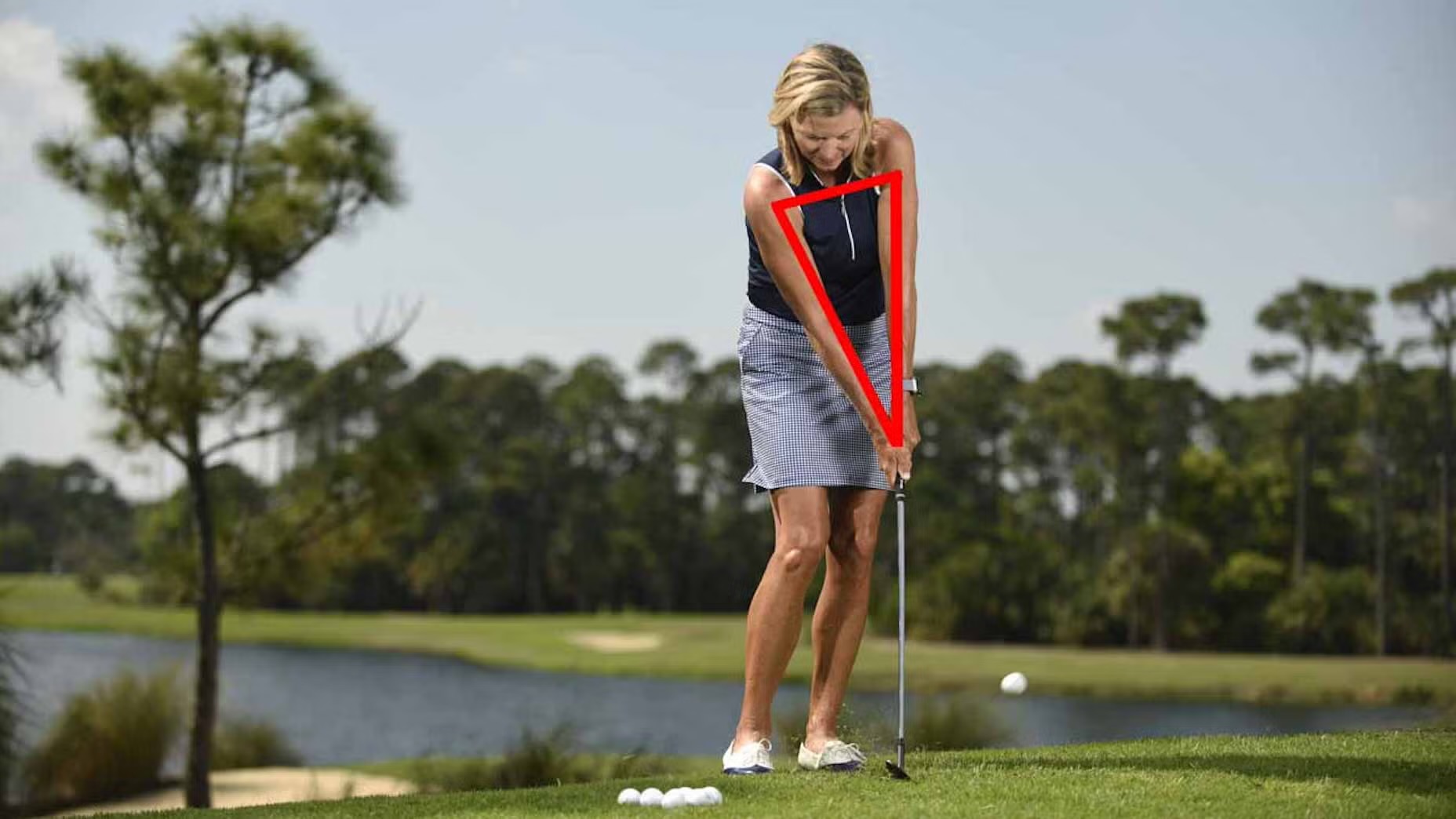
As you address the ball in a chipping stroke your hands should be ahead of the ball and your stance should be slightly open. The left arm leads with firm wrists through impact. Keep your lower body quiet but with flexed knees.
Most of your weight will be on your left foot. With qn open stance you will accelerate your club through the ball. If you have a poor lie position the ball slightly further back in your stance for a more descending blow. Hands ahead of the clubhead at address.
Grip down on the club for better control when chipping, and use the same approach with each club. As you swing, lightly brush the grass with the sole of the club and sweep the ball away smoothly.
Use a rocking movement in the shot. Swing back and then rock forward with the right knee going towards the target. The left arm leads the forward swing through.
When the ball lands, watch how the grain of the green affects your chipping. If the grain is against you, you’ll have to swing harder. If it’s with you, you’ll have to swing easier. If the grass is shiny the grain is with you and the ball will roll further. If it is dull it won’t roll further as the grain is against you. If you’re chipping downhill and the slope looks light coloured you’ll need to swing easier.
Be aware that the wind will affect chip shots. Of you loft the ball in the air in a strong crosswind, the wind will work on it. When the ball lands it will land at an angle and move sideways.
If you are just off the green on firm, dry, closely cut fringe, use a putter rather than chipping.
Uphill, downhill and sidehill lies
To play a short shut from one of these eyes you should alter your body position and club selection.
From an uphill lie lhe slope will add loft to the club. This may make you hit the ball too high. It will make distance more difficult to judge. Choose a less lofted club like an 8 iron. Align your body to the slope with your weight toward the right and play the ball more towards your left foot. This will allow you to swing along the slope.
From a downhill lie the ball will fly lower. Choose a 60 degree wedge or a sand wedge and play the ball back in your stance. Set your weight on your left side. Align your body with the slope to swing with it. The ball will roll further from a downhill lie so take that into account.
From a sidehill lie be aware that the ball will fall in the direction of the slope.
When the ball is below your feet your more upright swing will cause sidespin, which makes the ball fly from left to right. To counteract this stand closer to the ball with body weight forward and to the left.
With the ball above your feet, the shot will tend to be pulled left of the target because of the flatter arc of the swing. Stand further away from the ball and play it more towards the back of your stance. Set your weight to the left but more on your toes to retain balance. Grip down on the club, aim to the right and swing with the slope. Swing harder on this shot to compensate for the shorter arc that results from gripping down on the club. Aim well right and swing with the slope. Swing harder to compensate for the shorter arc that results from gripping down the club.
Bump and Run Shot
Playing on a links course it is useful to play this shot, especially in windy conditions. Use this shot when it’s difficult to get a lofted shot near the hole. Take a lofted club, perhaps a 7 iron and chip the ball into the upslope so it bounces up to the top of the mound and then runs down the other side of the green. Have the ball running smoothly down the slope.
Chipping from a bare lie
The important thing is to position yourself so you can contact the ball first, just left of centre. Hit the ball with a downward strike. Hands re positioned ahead of the clubhead and swing normally. Use a pitching wedge rather than a sand wedge for this shot.
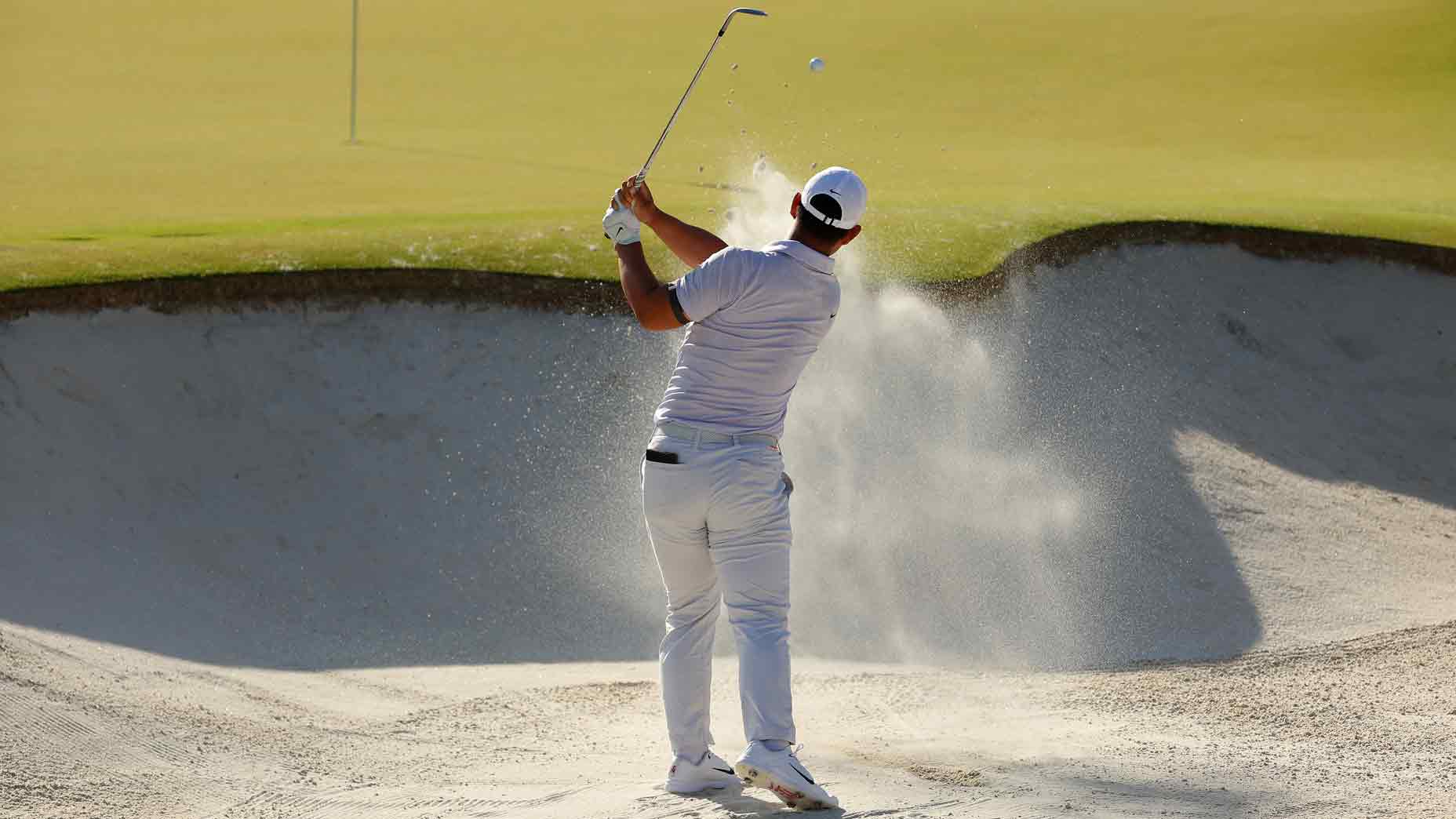
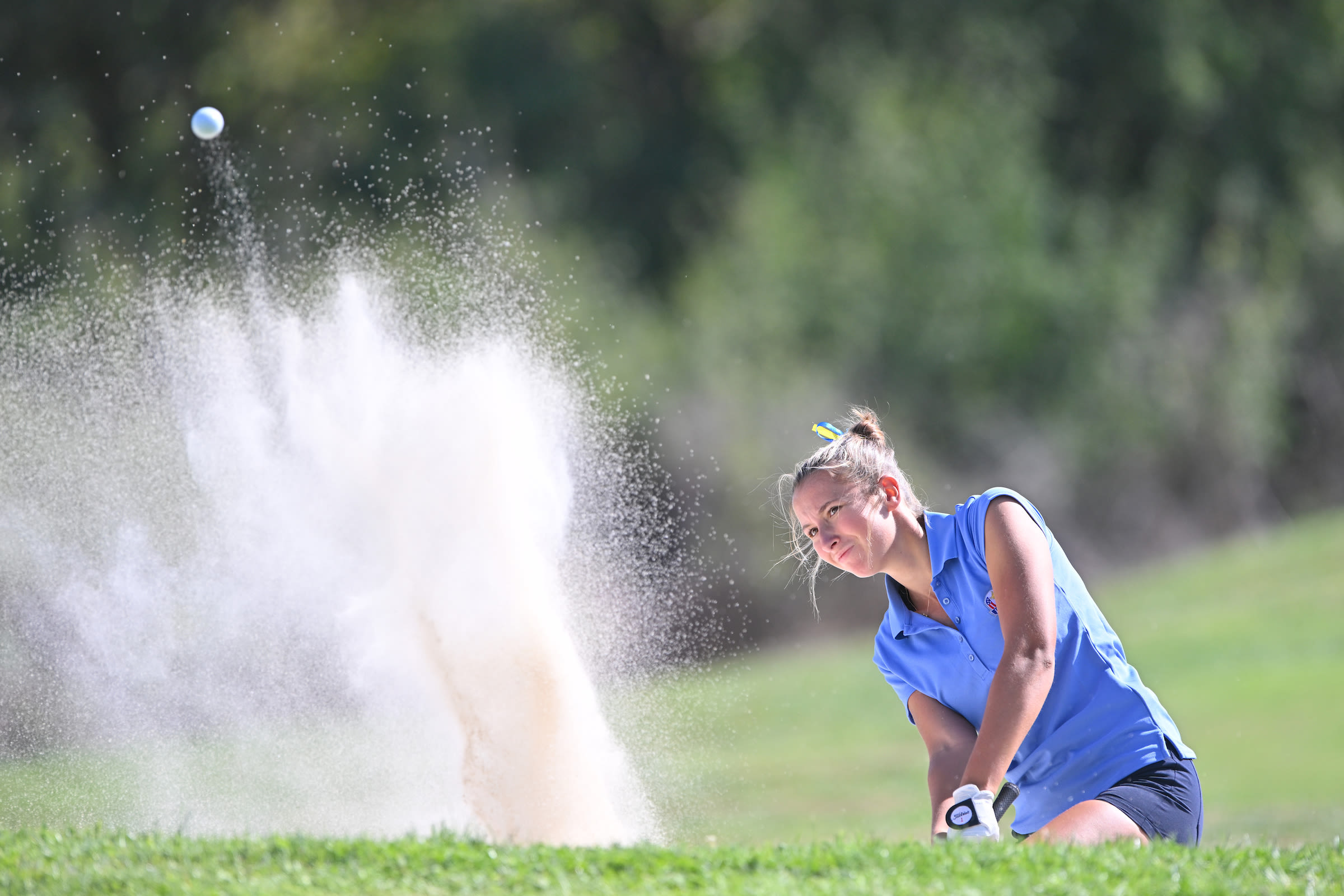
To play a basic bunker shot begin with a slightly weakened grip. Pick your target and align your body and the clubface in an open position. Swing along this line and hit into the sand about 2 inches behind the ball and explode the ball out. The clubface, in this explosion shot, hits the sand rather than the ball. Remember not to ground your club into the sand, it should hover above the ball until you start the swing. Use a three quarter swing but make a full follow through.
To weaken your grip, move your hands slightly to the left so your left thumb rests on top of the grip and points down the club shaft. A weaker grip helps keep the clubface open. With a strong grip, the clubface is more likely to dig into the sand instead of skimming through it.
As you take up your stance twist your feet into the sand to get a firm footing. This will prevent your feet sliding around in the slippery surface which could cause you to lose balance. You should feel that your feet are slightly restricted by the sand. This will affect your stance making your hands closer to the ball so grip down slightly to make the club shorter. When you swing you’ll make a three quarter shot but with your left arm fully extended.
Opening your stance means aligning your body about 10 degrees to the left. Turn your hips and shoulders slightly left, place a little more weight on your left foot, and swing along that stance line. Although your swing moves left of the target, the open clubface points slightly right, helping the ball fly straight toward the hole. Opening the clubface also adds loft. The flange on the back of the sand wedge helps the club skim through the sand, while the sole design keeps the leading edge from digging in. Aim to strike the sand about 2 inches behind the ball and the sand explodes the ball out of the bunker.
As you pull your left foot back to open your stance, pay attention to the ball position. Golf is a game of angles, so the ball may appear too far forward, but this is only an illusion. Play the ball about 2 inches forward of centre.
Aim to take a long and shallow swathe of sand as you swing through it and extend it through the sand another eight inches or so. It is useful to practice bunker shots from uphill and downhill lies as well as a normal flat lie. Watch the spot you want to enter the sand, not the ball.
In order not to scoop the ball out try and avoid taking too deep a swathe of sand. In the shot keep your left arm moving through. Make sure you follow through properly and finish high just as you would in a full swing. You have a greater margin for error with a sand shot because you don’t hit the ball, you only have to hit the sand two inches behind the ball.
To control distance in bunker shots you shorten or lengthen the swing, just as you would with a pitch shot. If you are in a deep bunker your swing path should have a steep descending blow and this will give you a short, high shot that clears the bunker face. Normally for a sand shot your swing path should be shallower, with a U shaped swing path. Rhythm and tempo are important in these shots, something that can be gained from regular practice.
Remember to swing along the contour of the sand. Swing with the slope, align your body and adjust your stance to keep your balance.
Long Bunker Shots
If you are in a fairway bunker or some distance from the green, use a squarer clubface. Play the ball from the middle of your stance and make a firm swing. A pitching wedge or 9-iron works well for this shot. To gain extra distance, strike the sand closer to the ball.
Ball in the bunker but under the lip
Where your ball has landed not in the middle of the bunker but under the front or side lip, more skill is involved than in a normal bunker shot.
Ball landed under the front lip you will be swinging uphill. Adjust your stance to the slope, leaning back with your upper body. If the ball is buried in the sand swing the clubhead just underneath the ball. Open the clubface more than usual and swing harder.
Ball landed under the side lip. This can be a very difficult stance to hit from. You may have to have one leg in the bunker and the other knee bent on the side. Extend down into the bunker and hit a normal explosion shot.
Ball outside of the bunker
If the ball lands on the grass just above the bunker you may have to climb inside the bunker to hit out. To play this grip down on the club to make it shorter, that way you will stay in balance. Aim to the right of the target and position the ball back in your stance. Keep your hands ahead of the ball and swing your arms back and through to keep the ball on target.
Ball in the bunker, played from outside
If you end in this difficult position bend over more at the waist to address the ball. Make the club long and grip at the end of the club. Swing more with your arms and try and restrict your body movement. Aim to the left as the ball will fly out to the right.
Fried Egg Shot
This happens when the ball lands in like a crater in the sand. It sits up but there is a swathe of sand either side of it. Work the leading edge of your sand wedge underneath the ball with a square or even closed club face – moving the hands more to the right – and explode the ball out of the lie.
Ball lands in a footprint
This is a common lie when bunkers are raked incorrectly or not at all. This makes the ball partially buried. Swing the leading edge of the club just underneath the ball. For buried shots, close the blade more by adjusting your grip. Or if the ball is below the level of the sand, open the clubface and pick the clubhead up more.
Buried Lies
For a buried lie you should play the shot with a square or closed clubface. This helps you get the bottom of the clubhead underneath the ball. This gets the sand to lift the ball up and out of the buried lie. The clubhead must be sharply descending into the sand rather than taking a shallow divot. Sometimes you will have to have no choice but to leave the clubhead in the sand. When the ball comes out it will roll as there will be little or no backspin.
Sometimes a pitching wedge or 9 iron is a better club selection as the sharper leading edge will help the shot come out. Hit behind the ball with a square or closed face.
Wet or compacted sand
Put the ball more in the middle of your stance, square up the blade and hit closer to the ball with a more descending blow and a more up and down swing.
If the ball is sitting up and there isn’t a steep face you could try to chip the ball out with a short, firm swing to catch the ball cleanly.
Ball Above the Feet
Practise different bunker lies regularly to build confidence. In most cases, a bunker lie is more manageable than playing from thick rough.
When the ball is above the feet you should stand up tall, grip lower on the club and aim to the right. This is because the ball tends to fly left to right from this lie. Open the clubface slightly and be sure to follow through.
Ball Below the Feet
For this shot you will bend over more at the waist and stay down throughout the swing. Make an upright arm swing and keep an open clubface. Stay down on the downswing and aim left because the ball flight will be from right to left.
Uphill Lie
Align your body with the slope of the bunker. Keep your weight forward onto your right foot. Your left shoulder will be higher than your right if you play right handed. Swing the club up the slope taking a shallow divot of sand and follow through. Let your hands turn over like a normal golf swing in this shot, rather than using them to keep the clubface open. If you do this the ball will fly forward out of the bunker. Lean back with the slope and release the clubhead.
Downhill Lie
Swing the clubhead under the ball without hitting the ball first or bouncing the club off the sand into the ball. Align your stance with the slope of the bunker. Weight is on the left side and left shoulder is lower than your right. The ball is further back in your stance and the clubface is open. Make sure to hit behind the ball and follow through down the slope of the sand with the clubface open. The ball will come out lower.
Golf is unusual because it combines a formal playing field with the unpredictability of nature. No two courses are the same, and because weather plays a major role, no two rounds are identical. Your strategy must therefore adapt to the conditions. This constant variation—in the elements and in the design of each hole—is what defines the essence of the game.
To become a skilled golfer demands a mindset that can analyse the features of a golf course, including the changing elements like weather and wind and that mind can decide what challenge is presented. On every hole there is a risk versus reward factor. The course forces you to evaluate every shot in terms of skill and your confidence to pull the shot off. The more decisive your shot selection and the clearer your thought process, the greater are your chances of mastering the course.
Golf is a game of attack and defence. Each hole has its own system of defences, from mounding and contouring to hazards. Architects may place these obstacles in plain sight or disguise them through the design of the hole. See my post on how course designers use camouflage. On approaching each hole become aware that there may be hidden elements or illusions waiting to sabotage your game!
Find the best route through these defences, aiming for the strongest landing and take-off areas. Pay attention to prevailing winds, as they should shape your shot selection. Every hole — and every course — requires its own strategy.
Golf requires control of spin, angles, and shot sequencing. It relies on clear strategic thinking. “Working the ball” means applying spin so the ball moves towards the target in the air and continues in that direction after landing. This brings skills such as fades, draws, backspin, and forward-bouncing shots into play.
A golf course is a field of hundreds of angled planes. These can deflect the ball in various directions. Golf is a game of position. A series of shots in order to put yourself into the best position for the next shot.
Consider the best leave for the subsequent shots. The value of positioning is that you begin to tailor your shot making abilities. Mentally take control. Your strategy is not restricted to tee shots. Approach shots onto the fat or safe side of the greens instead of at the flag may reduce your score dramatically. Architects try to tempt golfers into hitting risky shots. Know your limits and avoid trouble.
On certain holes a designer may attempt to upset a golfer/s balance and mind set. He tempts you to push too hard or to take unnecessary risks.. Rhythm and positive thinking are essential to a good round. Losing balls and losing strokes lead to losing confidence.
Golf is also a target game. Technical advances in ball construction, club making and swing mechanics have led to higher shot trajectories and the game is an aerial assault on the course rather than a land campaign.
A golf hole is a series of defined target areas. With your tee shot you can aim for a reasonably large landing area – 20 to 30 yards wide, whereas hitting into the green that landing area can be around 20 feet in diameter.
One approach is to break a longer hole into a series of par threes. Visualise it as a sequence of clear targets — for example, a 250-yard shot followed by a 140-yard shot. Choose a specific target for each stroke and play within your ability.
A course presents different types of holes. A strategic hole offers at least one sensible route to reach the green in regulation with minimal risk of penalty for a mishit shot. It also provides several alternative routes; usually, the longer the route, the lower the risk of a severe penalty.
A penal hole is one where the only way to reach the green in regulation involves executing at least one shot that will incur a penalty if misplayed. Often this includes out of bounds or an escape proof hazard like water.
A heroic hole offers two clearly different routes to reach the green in regulation. One requires a bold shot that carries a penalty if misplayed, but rewards success with a much better position or distance advantage. The player must therefore decide whether the potential gain is worth the risk.
Strategic, penal and heroic holes are blended into the course to create a course with balance and rhythm. If an entire course is given one of these labels then most holes will be of that type.
Golf course settings
Golf courses can be of geographic type. Either linksland, parkland, desert, mountain or tropical. There are significant natural factors that should influence how you approach a course.
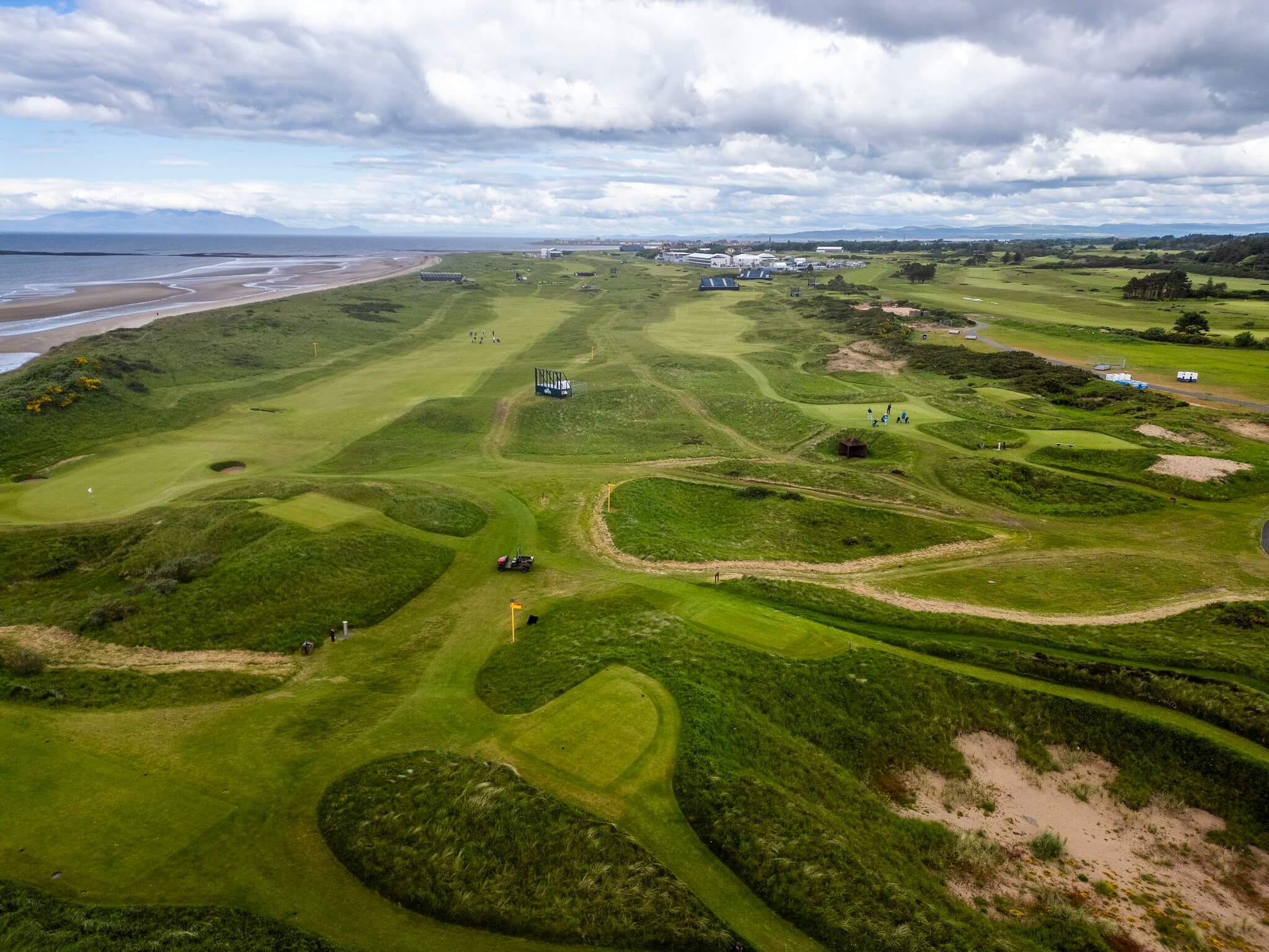
Links land is sandy, undulating hills or drones formed along a coastline by the wind and waves. Some can be located on rolling sandy terrain next to estuaries. Links courses seem to lack apparent definition. The openness of the seaside setting does not provide natural markers such as trees and hills that golfers usually rely on to judge distance.
Links courses have an irregular quality to them. As you walk on them your feet begin to feel the many bumps and rolls and the hidden swales which reveal more contour than expected. The ground is traditionally firm, sharp bounces are common and pot bunkers are a feature. Modern irrigation systems have made many links courses much lusher, softening them and compromising some of their unique characteristics.
Links favour fescue grass which tends to produce tight or thin lies. Fescue rough tends to be swirly and light and playing out doesn’t cause much resistance to the club head. Gorse and heather will, however, usually be so difficult to get out of that it is best to play out onto the fairway.
Links courses rely heavily on wind to provide part of their challenge. When the wind is strong a low ball flight or punch shots will have to be used. Find out about the local prevailing wind. The effective distance into the wind often affects club selection considerably. You may need two clubs more to carry the distance.
The low, to the ground bump and run and knockdown shots are useful weapons on a links course. To keep the ball low and run it to the hole will help your score.
Parkland courses are inland lay outs that are carved out of woods and forests with elevation changes, tees and water.
Trees serve as both guides and obstacles. They can block sightlines, conceal course features, and create a narrow, chute-like feel. Parkland grasses are often lush and heavy, usually producing good fairway lies. However, courses built on clay can become soft and waterlogged, reducing ball roll, especially in the rough.
Fairways often have a sweeping rolling character. Use the contours to your advantage. Rolling slopes force you to consider intended landing areas carefully because shots frequently finish on sidehill angles or roll into difficulties. Scan the tops of trees for the movement of the wind. Sometimes it can come from an unexpected direction.
Desert courses now give designers more flexibility through modern irrigation and maintenance techniques. Although deserts are generally flat, courses near mountains can include significant elevation changes. Holes set against mountain slopes can also make uphill and downhill transitions feel deceptive.
The desert sun creates intense light and shadow that can distort perception, while shimmering heat may produce a mirage effect. Double-check visual markers to judge distance accurately. Warm, dry desert air is often thin, like mountain air, so allow for extra carry; however, cold air pockets can reduce distance and deaden shots.
Due to the sandy composition of the soil, desert fairways and greens have two common characteristics. These conditions are very firm. The turf grass can be tightly manicured and will result in extra bounce and roll increasing distance. The extra roll can impact your short game and recovery play making it more difficult due to the reduce control in stopping the ball on the greens.
Desert courses are often tight and narrow where there are restrictions on using water for irrigation. Desert rough is difficult to recover from. Areas off the fairway will contain native vegetation.
Desert courses are sometimes found on rising plateaus near the foothills of mountain ranges. Not only do these provide dramatic backdrops and create contour, elevation and perception puzzles.
Mountain courses These feature dramatic changes in elevation and often give players the feeling of negotiating a slalom course on a ski slope. These courses are exhilarating but require precision and clear thinking. Because of the topography many holes are routed through narrow canyons and accuracy is a must. Don’t hesitate to sacrifice yardage for direction. It’s easier to take a shorter club than look for an errant 300 yard drive.
Mountains mean water and streams. Occasionally these streams will be difficult to see so check the scorecard for maps.
The added elevation of mountain courses means thinner air and shortness of breath for the golfer. Shots will travel further. Add 5% for each 1,000 of elevation. Test your distances on the practice range before going out onto the course. Distances and dimensions can seem quite different at elevations of 10,000 feet.
Tropical courses Unlike desert environments where there are sparse vegetation and trees, the forests and jungles pose opposite problems for golfers. Prevailing trade winds affect how the holes are laid out.
Lush vegetation forces designers to use special techniques for mountain holes. The composition of the grasses and the way the ball plays off them. Grasses in these parts of the world, like zoysia, can be as tough as wire.
Many jungles grow on mountains so courses here combine mountain and jungle environment. The jungle environment can conceal dangerous obstacles that magnify the challenge and excitement. Grass can grow uncontrollably and sporadically in these regions causing a variety of lies.
Golf courses have many faces, depending on where they are built. You must know the territory and its specific conditions and adjust your game plan.
Golf, as some of us know, is a game of emotions and overcoming negative thoughts. One of the keys to this is to understand hazards on a golf course and how to avoid them or tackle them if the shot requires it. As Bobby Jones wrote “the value of a hazard is oftentimes more psychological than penal”. Or as Shakespeare put it “nothing is good or bad but thinking makes it so”.
We’ve already had a look at bunkers, now let’s look at water and trees.
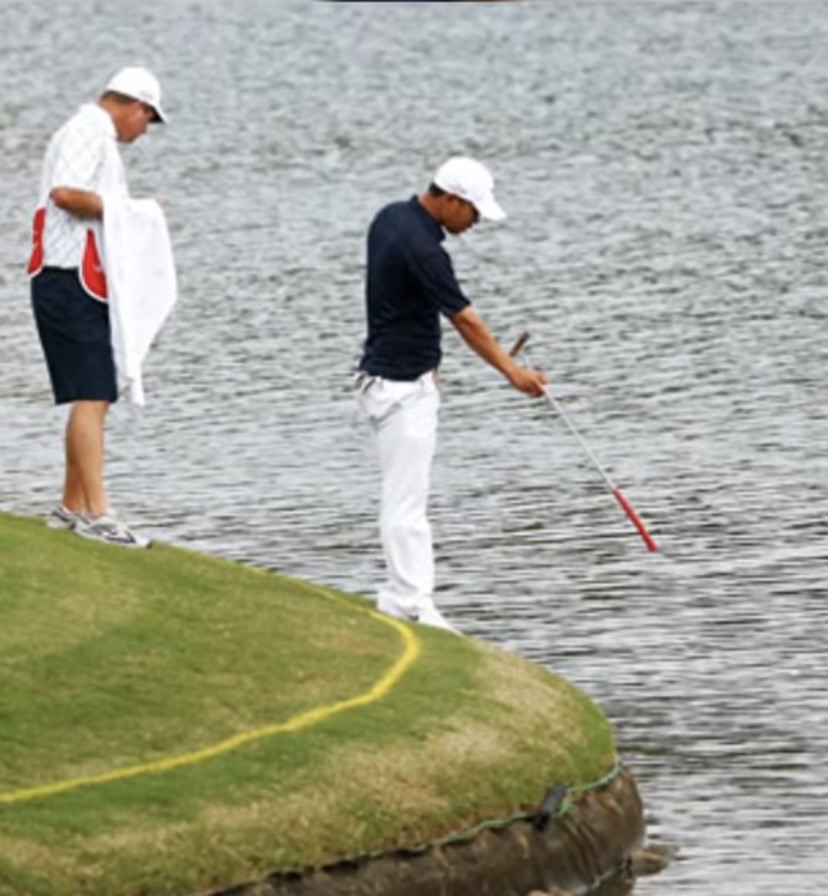
Your perception of a hazard might be that escape from it will be difficult or impossible. But it’s all about shot making skills. It is rare that a situation is impossible to escape from and the only course of action is to take a drop and a penalty shot. These inescapable hazards are out of bounds, lakes, and the sea. Deep rough as we I wrote about in a previous post can be penal and cost you more strokes than taking a drop from water.
Work out the shot’s degree of difficulty. When a hazard must be carried the landing area must be your focus, not the challenge. Many golf course designers make holes look more difficult than they actually are. It may be less difficult than it appears
Most hazards will offer you several shot making options. To carry your ball over a pond look at the adjacent slopes running into it. Identify a target area that will give you a good subsequent shot – calculate accurate distances on the golf course and know how far you can reasonably expect to hit each club. Use a yardage book or laser measuring device, know how far you hit each club and look at sprinkler heads to see if distances are marked on them. If you have a lake to carry work out how far you are from the water’s edge, then calculate the carry across the lake to the front portion of the green. The total should provide you with a reasonable estimate of the distance you have to hit the shot.
When you practice work out your distances you hit each club. That will help you calculate your club selection on the course. This is a very important part of your game to know your individual skill in hitting each club. Work out your own club distance chart.
Hazards are placed to make the game more interesting, not to punish bad shots. The feeling of carrying a drive across an ocean and the achievement of landing the ball on the green is worth all the effort in learning how to work out distances.
Water Hazards
Water on a golf course can be lakes, ponds, rivers, streams, creeks, oceans or marshy wetlands. Look at the location, its angle with respect to the hole and its shape.
A water hazard may run parallel to the hole, cross it diagonally, curve around it, or sit at an angle. It may be near the tee or green, alongside the fairway, and can take many shapes. Occasionally a stream could cross a fairway at a right angle to the configuration of the fairway and green.
Water hazards are generally not neat; they are irregular haphazard forms. They may have inlets or other jagged features requiring a carry of several more yards than a smooth edged hazard.
Estimating distance over water can be deceptive because a large body of water may appear flat and shorter than it really is. Check the surrounding land to see if it is contoured so that balls landing there may turn into the hazard. The water hazard may be part of the course/s drainage system and be situated in a low area. If the land flows towards the hazard consider this factor when making your club selection.
When faced with a carry over water you must consistently be aware of your lie. One of the trickiest shots is hitting from a downhill lie across a water hazard. A bad lie forces you to be conservative. If you have a decent lie you can be more aggressive. Laying up might be the most sensible option if it gives you a good angle of approach for your next shot.
Water placed near a tee is a distraction. It may be well clear of a tee shot but will put doubt in a golfer’s mind. Water near a fairway may tempt you to play close to it to get a preferred angle of attack or a better distance for your next shot. The water here can capture poorly planned or executed shots. When water is placed across the fairway the designer is asking if you can play safely across or should you take a conservative approach and lay up short.
Water in front of a green is commonly used and is one of golf’s trickiest shots. Not only are you trying to clear the water but you must land and stop the ball on the green near to the pin. Make sure you select a club that will carry the hazard, with the least margin of error.
A good way to block out water in the front of a green is to focus on a feature behind it such as the edge of a bunker, a tree or a mound and play to a distance at the rear of the green. Features behind make for visual definition and shifting your attention to this area will make the water hazard secondary to your field of vision and thought process.
Water surrounding a green offers little room for error. It is sometimes found on short par 3s and on par 5s that call for a short approach shot. Calculate the distance to the middle of the green and aim for it. Shooting for a flagstick close to the water/s edge is the temptation. It calls for conservative strategy.
Consider the area between the edge of the water hazard and the putting surface. It may be a slope, mound, bunker, or flat ground. Allow for the extra distance from the water’s edge to the front of the green, and remember that if your ball finishes there, you may face deep rough.
This buffer zone is sometimes thick grass along a body of water. It may save a misplayed shot from going into the water and let you recover your score. On the other hands rocks, waste material and more penal rough won’t give you any help. Look for a little room for error to ensure carrying the hazard and the buffer zone.
One of the best recoveries from water in professional golf was when Seve Ballesteros, playing in the Masters, found his ball in Rae’s Creek on the par 5 thirteenth hole, partially submerged. After taking off one she he blasted the ball out and he made his par keeping his momentum intact and propelling him to winning the tournament.
Playing from Trees
Trees are not just a hazard, they can also be a safety barrier against errant shots. They can also help you with your shot selection by indicating the proper line or providing a backdrop for a green to help you calculate distances.
If you have a misaligned shot that hits a tree and you end up under or behind one of them then you are in an area of the golf course that you want to avoid.
But trees are three dimensional challenges, These vertical hazards often require a more complex shot selection if you plan to play over, under or through a tree or group of trees. You must not only select the proper line and calculate the distance but you must determine how you are going to shape your shot around the tree hazard. If there is a large tree inside a dog leg then you must calculate how much fade or draw to put onto the shot. So there is a third parameter to be worked in: line, distance and shape of shot. Assess the situation. Will you go over, under, around or through the trees?
When you are on the practice ground not only work out how far you hit each club but how high you hit them. Work out the trajectories and practice hitting right to left and left to right. This knowledge will help you successfully tackle the three dimensional challenge of tree hazards.
Small groves of trees can be used to guard any portion of a golf hole from the tee through to the green. A shot may be required over, under, around or away from them. Trees near a green may guard a corner of the putting surface. Look at how difficult it would be to escape from them should you find yourself in them.
Occasionally, a single tree will be in the landing area off the tee to make a tee shot tighter and requiring more accuracy. If the golfer gambles and hit nearer to the tree they may be rewarded with a shorter approach shot and better angle to the green.
Sometimes you will find a lone tree directly in the centre of a fairway at the landing area. Or a single tree may guard a corner of a green surface and make a portion of that green inaccessible from parts of the fairway.
Trees are growing and change height, width and shape due to pruning or storm damage or diseases. Changes in the trees, gradual or sudden, will change the strategic role they play on the course over time.
Water and tree hazards create varied challenges on the course. Managed well, they can help you protect your score, and understanding their purpose can guide smarter shot-making.
On Monday Bryson posted that he was going to make an announcement about “Coming Home”. This was a teaser to make people think je was rejoining the PGA Tour. On Tuesday we found out the “coming home” comment is about nothing exciting really.
His backyard games challenge on his you tube channel involves him literally coming home.
In his own backyard a combination of 10 influencers and social media followers will play for $100,000 over 10 days. One hole matches from whacky routes around his backyard. Each day one is eliminated. The finalist will play a 3 hole shoot out against DeChambeau to win the prize. If De Chambeau wins a random Instagram follower will be chosen to receive the prize.
Still no news on his own future but the clock is ticking on his decision.
LIV Golf announced a proposed restructuring agreement that could transfer majority ownership of the league to its players. The filing, showed that several of LIV’s biggest names—including Jon Rahm, Bryson DeChambeau, Dustin Johnson and Cameron Smith—are owed millions of dollars. LIV also hopes the proceedings will extend U.S. bankruptcy protections to its international assets.
Under the proposed restructuring, London-based private-equity firm BC Partners would finance an attempted return in 2027 through what LIV described as a “recapitalization transaction.” The plan requires court approval.
Questions remain about the nature of the firm’s commitment, including whether the financing is structured as a loan, dependent upon additional investors or contingent upon a number of players remaining with the league.
“This process gives us the structure and time to pursue a landmark transaction and begin the next chapter of LIV Golf—one built around the fans, an innovative, player-first ownership model, and a part of the global golf ecosystem,” LIV CEO Scott O’Neil said in a press release. “We are excited about what lies ahead and yet, there is still much to accomplish in the months ahead. We believe deeply in LIV Golf’s future, the opportunity in front of us, and the people who will help us realize it. We are grateful to our players, the incredible team at LIV Golf, our Board, BC Partners, and our partners all over the world standing tall with us, and we thank them for their belief in our next chapter.”
The restructuring would likely release LIV players from their existing contracts, allowing them to pursue opportunities elsewhere. Golf Digest reported earlier this year that agents representing several LIV players had contacted the PGA Tour and DP World Tour to explore possible paths back.
The bankruptcy filing had been expected for months after Saudi Arabia’s Public Investment Fund withdrew its financial support from the five-year-old league. It comes a little more than a week after LIV terminated most of its remaining staff. LIV concluded its 2026 season in Indianapolis in late August, one week earlier than scheduled after canceling its planned finale in Michigan. The shortened finish followed months of questions about the league’s finances and future.
PIF has agreed to provide nearly $50 million in debtor-in-possession financing, which would allow LIV to continue operating during the proceedings. BC Partners and other prospective investors are expected to provide financing once the league emerges from Chapter 11.
PIF announced in April that it would stop funding LIV as part of a broader shift toward domestic projects and away from global investments that had failed to produce sufficient returns. The economic effects of the regional war with Iran also placed greater pressure on the sovereign wealth fund’s holdings. The sportswashing experiment cost an estimated $5 billion to $8 billion from its 2021 launch through this year. Yasir Al-Rumayyan—PIF’s governor, LIV’s architect and the chairman of its board—resigned after the funding was withdrawn.
LIV’s financial troubles have extended beyond its players. Several contractors say they have not been paid for their work, while the league also faces a lawsuit from the Premier Golf League alleging breach of confidence and conspiracy by unlawful means.
Sometimes bunkers can be a better option to recover from an errant shot than playing out of the rough. From the sand you can control the ball more easily and have a better chance to save par.
The more you practice in bunkers and work on your technique the less worried you will be landing the ball in the sand.
Course designers use bunkers aesthetically to contrast against the green landscape as well as a shot making challenge. They are part of the strategy in the routing of a course. Some courses can have as many as 100 bunkers to make sure there is plenty of risk reward. But more doesn’t mean more difficult. It depends on where they are positioned.
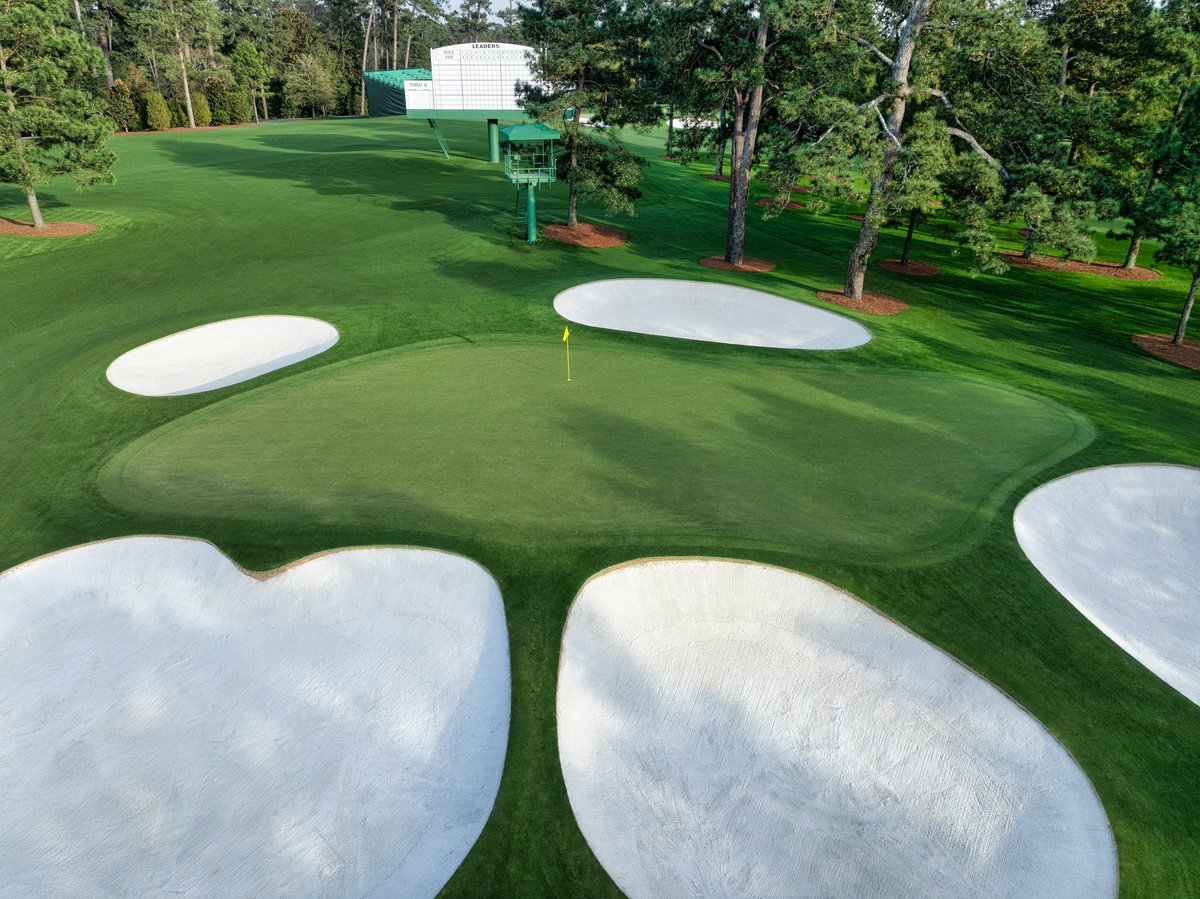
Augusta National has 44 bunkers, but it has strategically placed creeks and water hazards. They are balanced with other challenges.
Types of Bunkers
A carry bunker is a flat, low bunker which protrudes out into the fairway and normally allows golfers to directly carry it. It is usually positioned short of the preferred landing area and is easily carried. They are usually easy to get out of due to the flat lies. Often carry bunkers are found in the corner of a dog leg hole.
A collection bunker gets its character from the ground surrounding it which is sculpted to channel the ball into the bunker. Sometimes these bunkers can be deep and big with a high front wall. They force you to play backwards or sideways to recover the shot. The monster hole on the 4th at Royal St Georges is a collection bunker. You should try to avoid these and this should inform the type of shot you play. If you do find yourself in a collection bunker play the easiest shot to get out.
A definition bunker highlights a target zone, off the tee, a landing zone on a par 5 or around the green. This is the type of bunker you will encounter most frequently. The degree of difficulty depends on the length and type of shot required and its position to the fairway. These bunkers can help you judge the distance of your approach shots to the green, especially on elevation. Study the flagstick to see how much is visible. If you can see most of the pin you are close to the bunker. If you can’t see most of it it’s likely to be positioned further back on the green so adjust your shot selection for this additional distance.
Target bunker. Some holes will use a bunker to show a direction. Sometimes these are just for aiming purposes. On dogleg holes these give golfers a feel for how the hole opens out.
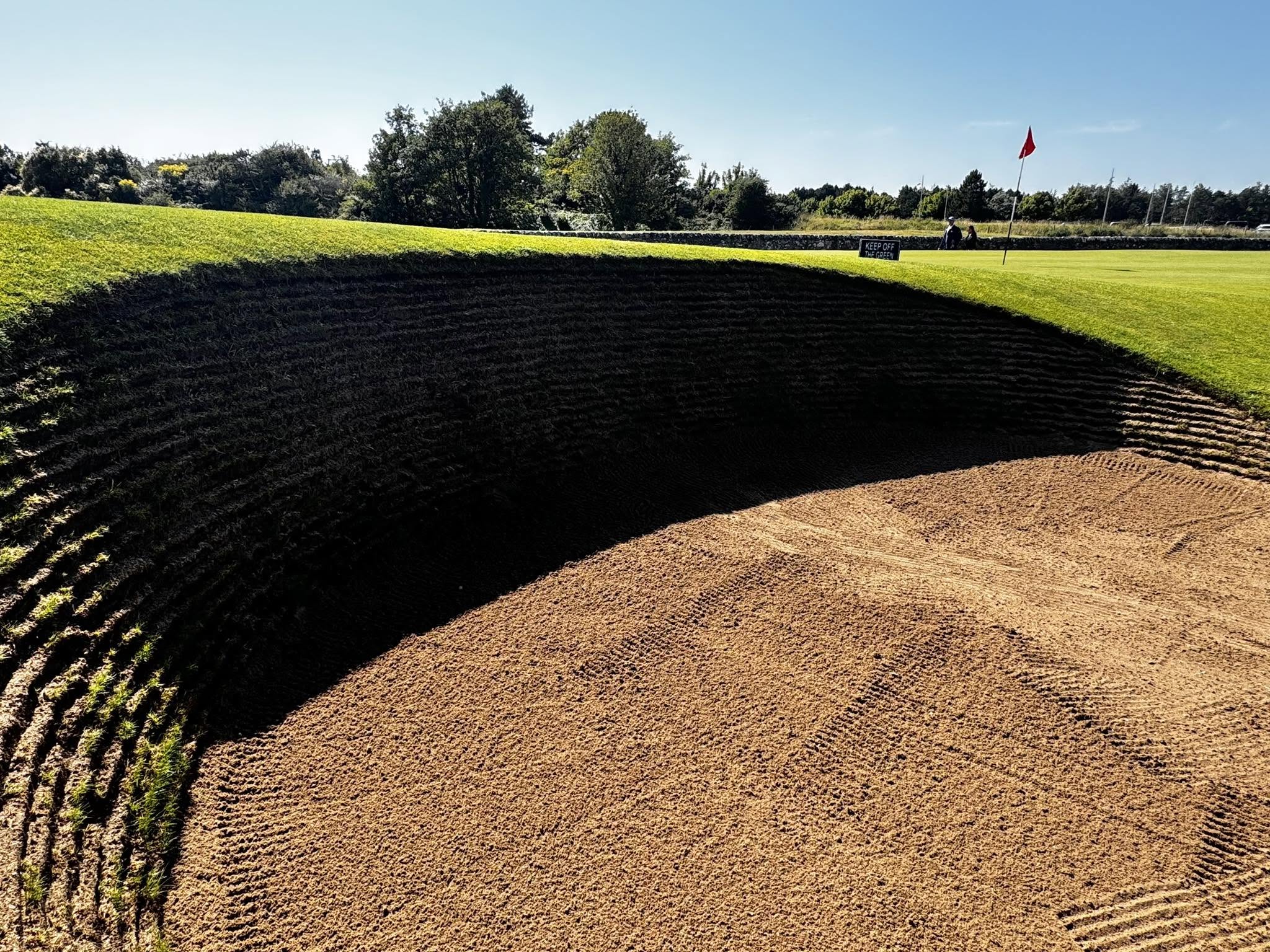
Pot bunkers These small round-shaped bunkers with steep sides make recovery difficult because of a severely elevated shot and a small space to get your stance. Pot bunkers are common on links courses – they often guard the front edge of greens. They can be so steep and deep that escape may only be by playing out sideways.
Face bunkers these show their face to the golfer. They can be used to conceal a green’s distance. The face’s incline will determine the severity – the steeper the slope the more difficult the bunker.
Sometimes if a green is elevated with a severe side slope a bunker may be placed in front or on the edge to keep the ball from rolling all the way down to the bottom of the hill.
Waste bunkers these are long, flat bunkers with vegetation surrounding it. The often protect a large portion of fairway. They sometimes contain small islands of rough inside them that jut out of the sand, creating unusual lies. To play a shot from a waste bunker pick the ball cleanly off the sand with a full shot or chip out.
Looking at the topography of a hole start by analysing the placement of bunkers on a course. This will help you formulate a strategy. Some bunkers will force you to hit harder to get more distance to get past them, others will force you to position your shot at a certain angle.
Patterns of bunkers
Central bunkers these will divide the fairway into two sections. Look for them in the tee shot landing area or the second landing area on a par 5. These bunkers tend to be long and thin – or pot bunkers – allowing room for two sections of fairway to be either side of them.
Cluster bunkers this concept makes use of grouping three or more bunkers to add definition and contrast to an open hole. They tell you to steer clear and position your ball to the side of them.
Cross pattern bunkers these bunkers are usually set at a diagonal bisecting the width of the fairway at a sharp angle. The more yardage you cut off the greater the risk and you will not carry the bunkers. You will need to consider distance and direction. Sometimes cross bunkering will cut directly across the fairway with little angle. The distance becomes more relevant than direction to club selection is paramount to carry the obstacles comfortably.
Bracket bunkers These are arranged in a series of pairs on opposite sides of the fairway or green. They squeeze the fairway landing area and entrances to the green challenging players to hit the ball between or over them. They force you to plan how you should place your tee shot or what angle you want for approach.
These bunkers around the green help players to visually determine where the edges of the putting surface began. Bracket bunkers near greens serve to produce pin locations of varying degrees of difficulty. Pin positions near the centre of the green will be easier, near the edges will be tougher to attack.
Staggered bunkers are placed at varying distances on opposite sides of the fairway rather than in balanced pairs. This forces golfers to decide which bunker is most likely to affect their shot. The pattern can create a snaking fairway and requires players to choose the best part of the landing area as their target. It is used both off the tee and near the green.
Surrounding bunkers This pattern is used near greens when the designer guards the edge of the green on all sides because the golfer has a short approach or tee shot on a par 3. Miss the green and you are in a bunker. This can be seen on the 7th hole at Pebble Beach.
Characteristics of bunker sand
In windier areas a heavier, coarser type of sand is used so that it doesn’t blow out. In areas where there is frequent rain a more porous type of sand is used so that it drains and dries more quickly. On slopes a sand with drainage and compaction so that it doesn’t slide away from the slope. Look at the different colours some of which have been chosen for better aesthetics.
Softer, finer sand gives golfers the chance to play higher shots to elevated greens. The best way to determine the type of sand you are faced with is to use your feet. As you go into the bunker feel the texture and depth of the sand. Does it give way easily, making deep footprints, or are your feet secure in the bunker? This will tell you how the sand resists and what shot you need to hit for a good recovery.
The four most common types of sand are silica, limestone, river and coral.
Coral sand is common in tropical climates. Its large, loose particles usually keep the ball sitting on top rather than letting it bury. Limestone sand, often found on inland courses, can range from very fine and powdery to coarser in texture. The softer and deeper the sand, the more the club is likely to sink into it. Limestone sand is good for generating backspin. River sand drains well and is durable. The ball tends to sit up reasonably well. Silica sand is pure. It looks white, lending a contrast to the green fairway. The particles of the sand tend to be round, increasing the chances of a fried egg lie. A ball buries halfway in the sand. An ordinary explosion shot from a bunker will not impart much spin from this type of sand.
Dry sand and wet sand have very different playing qualities. Dry sand is less firm and you can bury your club behind the ball. Take a minimum amount of sand and follow through properly. Wet sand is more compact and the club can bounce off the surface causing you to skull or blade your shot. Swing easier and take less sand because the ball will come out low and fast.
Designers use bunkers for definition and strategy. Sometimes a bunker will save you extra strokes if you know how to escape. Sand is friendlier than water or trees on a golf course.