
Ahead of next week’s Dunhill Links Championship, here is a concise look at the famous double greens on the Old Course at St Andrews and Old Tom Morris’ innovations in course design.
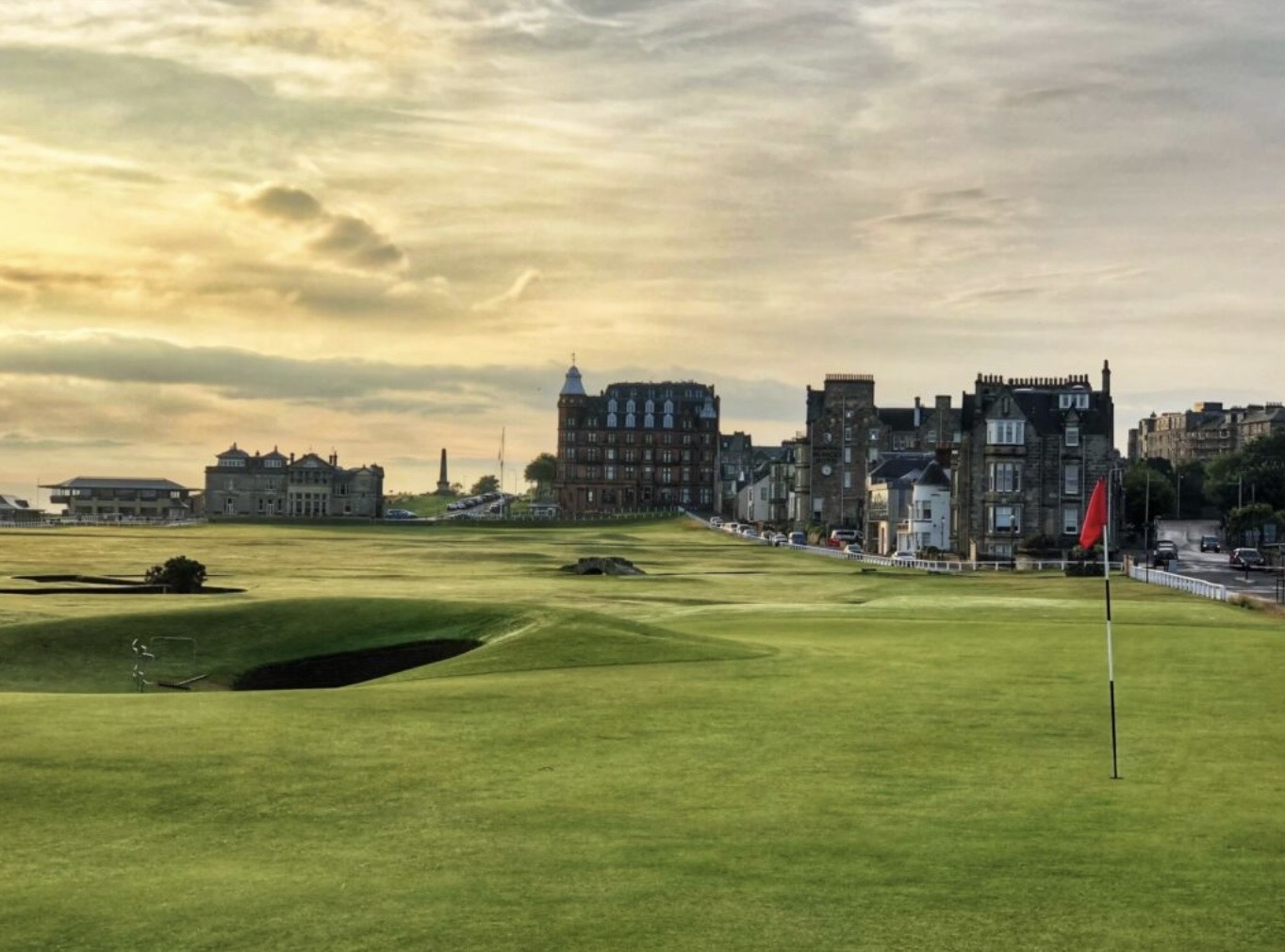
The Old Course is known for its seven double greens, shared by the 2nd and 16th, 3rd and 15th, 4th and 14th, 5th and 13th, 6th and 12th, 7th and 11th, and 8th and 10th holes. Each pairing adds up to 18.
Only the 1st, 9th, 17th and 18th holes have single greens.
The double greens developed from a combination of natural geography, limited space and the original routing of the course.
When the Old Course was first laid out, it occupied a narrow strip of linksland bordered by gorse and heather. With little usable space, the early routing ran straight out and back along much the same line, so golfers played to the same greens in both directions.
As golf became more popular in the 1800s, this shared-green arrangement caused delays, near misses and confusion as groups approached the same targets from opposite directions.
Rather than building entirely separate green complexes, the solution was to enlarge the putting surfaces so each could hold two holes and two flags. In 1856, Old Tom Morris formalised the double-green layout, creating the distinctive arrangement still associated with St Andrews today.
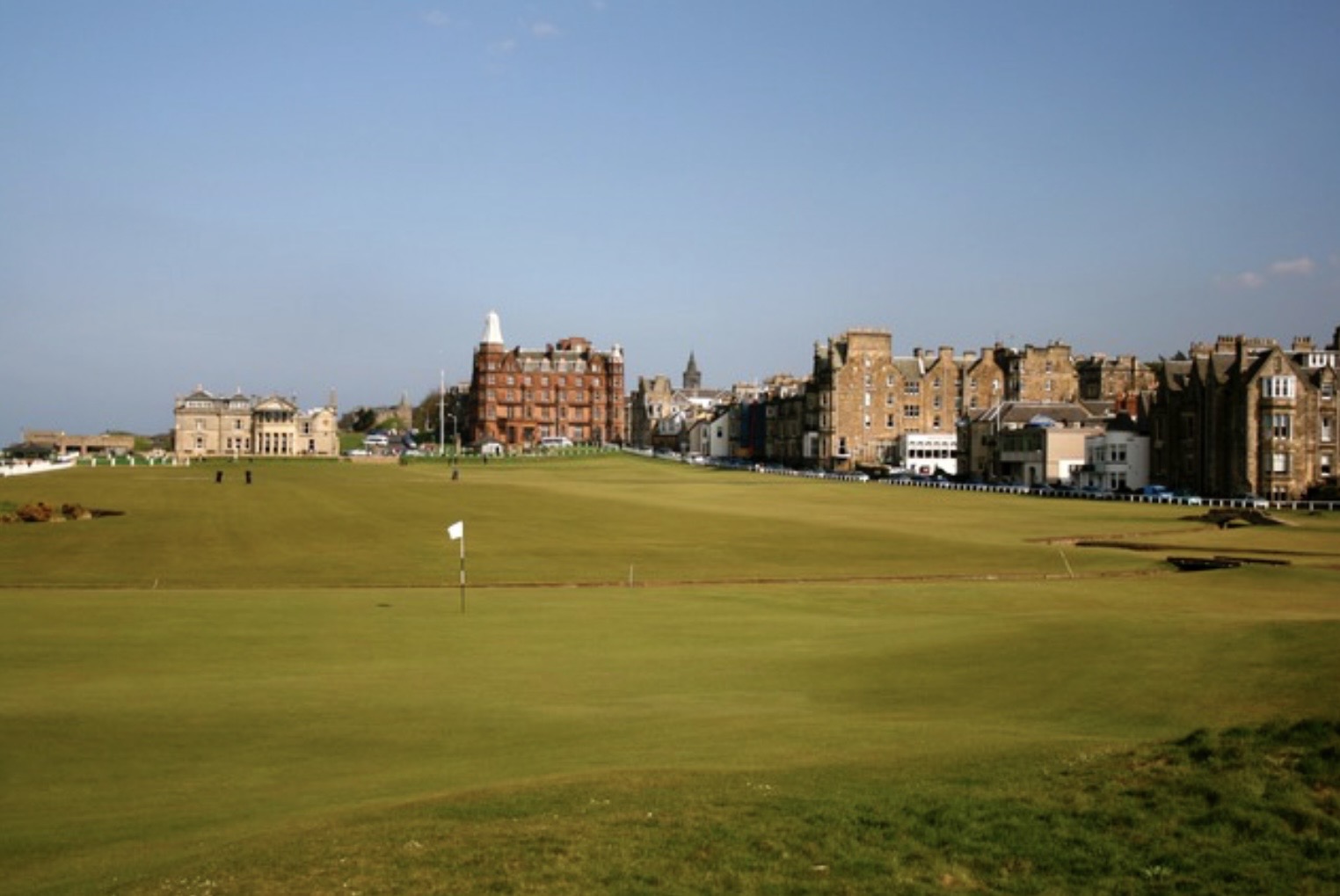
A colour-coded flag system helped players identify the correct target, and it remains in use:
White flags mark front-nine holes going out.
Red flags mark back-nine holes coming in.
Old Tom Morris did not invent the 18-hole round, but his work at St Andrews helped make it the global standard. Before the change, St Andrews had 22 holes. In 1764, the Royal and Ancient Golf Club combined the first four and last four short holes into four longer ones, reducing the course to 18.
Even after that change, the course remained congested because much of the routing and several greens were still shared.
Old Tom Morris’ redesign
When Morris returned to St Andrews as Keeper of the Greens in 1864, the 1st and 17th holes still shared a putting surface, creating a major bottleneck.
Around 1863–1864, he separated the 1st green from the 17th, creating an independent opening green and easing traffic at one of the course’s busiest points.
Along with separate teeing grounds, this produced the layout recognisedtoday: seven double greens and four single greens.
Because St Andrews was golf’s epicentre, other clubs adopted its 18-hole model, helping establish it as the standard format worldwide.
Modernising Golf Course Architecture
Morris’s influence extended beyond the number of holes. He also helped shape modern course design and maintenance in several important ways.
Strategic bunkering
Before Morris, many hazards were simply natural features. He helped turn bunkers into strategic obstacles, placing them so players had to choose position and route rather than rely only on distance.
Separate teeing grounds
Earlier players often teed off close to the hole they had just completed.Morris introduced dedicated teeing areas, improving flow and protecting the greens from unnecessary wear.
The two-nine loop: At St Andrews and courses such as Muirfield, Morris helped popularise the pattern of a front nine moving away from the clubhouse and a back nine returning to it, creating the familiar stop at “the turn”.
Agronomy innovations: He advanced greenkeeping by top-dressing putting surfaces with sand to promote healthier, tighter turf and by supporting mowing practices that produced more consistent greens.
Morris also designed influential courses elsewhere, including Forfar Golf Club, one of the earliest courses built as an 18-hole layout from the outset.
His work at Prestwick, including the famous blind Alps hole, further shows his lasting influence on golf course architecture.

